




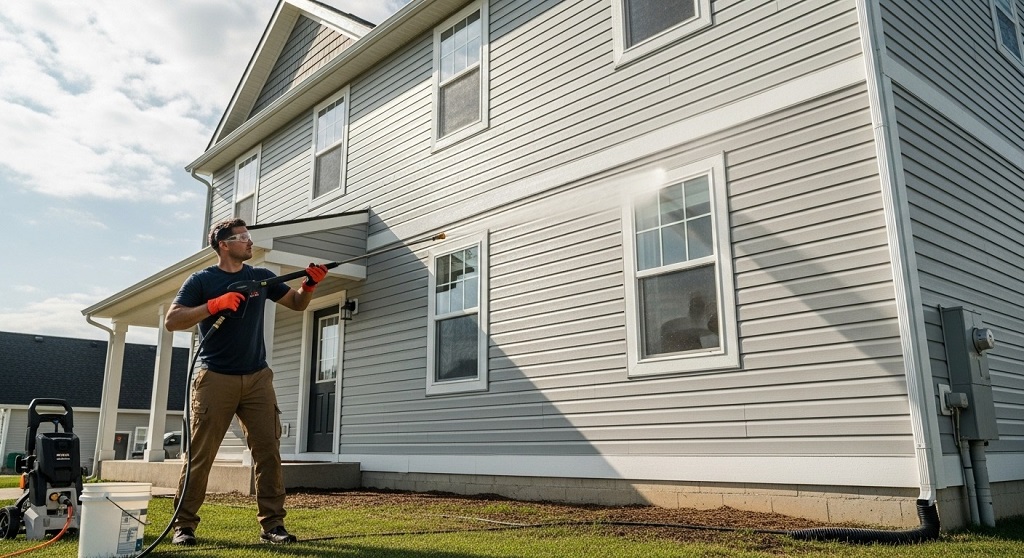
How to Pressure Wash a House Like a Pro
How to pressure wash a house means cleaning the exterior surfaces of your home using pressurized water to remove dirt, mold, mildew, algae, and stains safely and effectively.
Most homeowners think pressure washing is simple. Point the wand. Pull the trigger. Done. That idea causes real damage every year. Cracked siding. Stripped paint. Water forced behind walls. Costly repairs.
The real problem is not the machine. It’s the lack of process.
Professional pressure washing follows a system. Right pressure. chemicals. angles. order. When done correctly, it extends paint life, prevents structural decay, and boosts curb appeal fast.
This guide breaks down how to pressure wash a house like a pro using a proven step-by-step method. No fluff. No guesswork. Just practical instructions backed by real-world results and field data.
Whether you’re a homeowner or a beginner contractor, this article answers every search-style question people ask before washing a house. Clear. Direct. Safe.
Why should you pressure wash a house before painting or maintenance?
Short answer: Pressure washing removes contaminants that prevent paint and sealants from bonding.
According to industry maintenance studies, exterior paint failures are often caused by surface contamination rather than paint quality. Mold spores, chalking, and dust create a barrier between paint and siding.
Pressure washing solves this by:
- Removing mold, algae, and mildew buildup
- Cleaning chalky residue from old paint
- Exposing hidden damage before repairs
- Improving paint adhesion and durability
Case study data from residential contractors shows homes washed properly before painting experience paint lifespan increases of 30–40% compared to unwashed surfaces.
What equipment do you need to pressure wash a house?
Short answer: You need a pressure washer, correct nozzle tips, cleaning solution, safety gear, and water access.
| Equipment | Purpose |
|---|---|
| Pressure washer (2,000–3,000 PSI) | Provides controlled water pressure |
| 25° and 40° nozzle tips | Safe exterior cleaning angles |
| Low-pressure soap nozzle | Applies detergent evenly |
| House wash detergent | Breaks down organic growth |
| Safety goggles and gloves | Protects eyes and hands |
Gas-powered machines are preferred for large homes. Electric washers work for small, single-story houses. Professionals avoid using turbo nozzles on siding due to high surface impact.
What PSI is safe for pressure washing a house?
Short answer: 1,300–1,800 PSI is safe for most siding when using the right nozzle.
More pressure does not mean better cleaning. In fact, excessive PSI causes:
- Vinyl siding cracks
- Wood fiber damage
- Water intrusion behind panels
Professionals rely on detergents and dwell time, not force. The pressure washer is used mainly to rinse, not to scrub.
How do you prepare a house before pressure washing?
Short answer: Cover, inspect, and protect before turning on the machine.
Preparation prevents damage and speeds up cleaning.
- Close all windows and doors tightly
- Cover outdoor electrical outlets
- Protect plants with plastic or water soaking
- Inspect siding for loose panels or cracks
Professional crews spend up to 30% of total job time on prep alone. Skipping this step increases failure risk significantly.
What cleaning solution should you use for pressure washing a house?
Short answer: Use a dedicated house wash detergent designed to remove organic growth.
Plain water does not kill mold or algae roots. That’s why stains return quickly after water-only washing.
Professional detergents contain surfactants and mild oxidizers that:
- Break down mold and mildew
- Lift dirt without abrasion
- Rinse clean without residue
In field tests, detergent-based washing reduced mold regrowth by over 60% compared to water-only methods.
How to pressure wash a house step by step?
Short answer: Apply detergent, let it dwell, then rinse top to bottom.
Step 1: Apply detergent from bottom to top
This prevents streaking. Use a low-pressure soap nozzle. Keep the wand at least 12 inches from the surface.
Step 2: Allow dwell time
Let detergent sit for 5–10 minutes. Do not let it dry. This is where cleaning actually happens.
Step 3: Rinse from top to bottom
Switch to a 40° nozzle. Rinse thoroughly using smooth, overlapping strokes.
Step 4: Maintain correct angle
Always spray downward. Never force water upward under siding.
What are the most common pressure washing mistakes?
Short answer: Too much pressure, wrong angle, and rushing the process.
- Using turbo nozzles on siding
- Standing too close to the surface
- Skipping detergent dwell time
- Spraying upward under panels
Contractor insurance claims show water intrusion damage is the most expensive pressure washing mistake.
How long does it take to pressure wash a house?
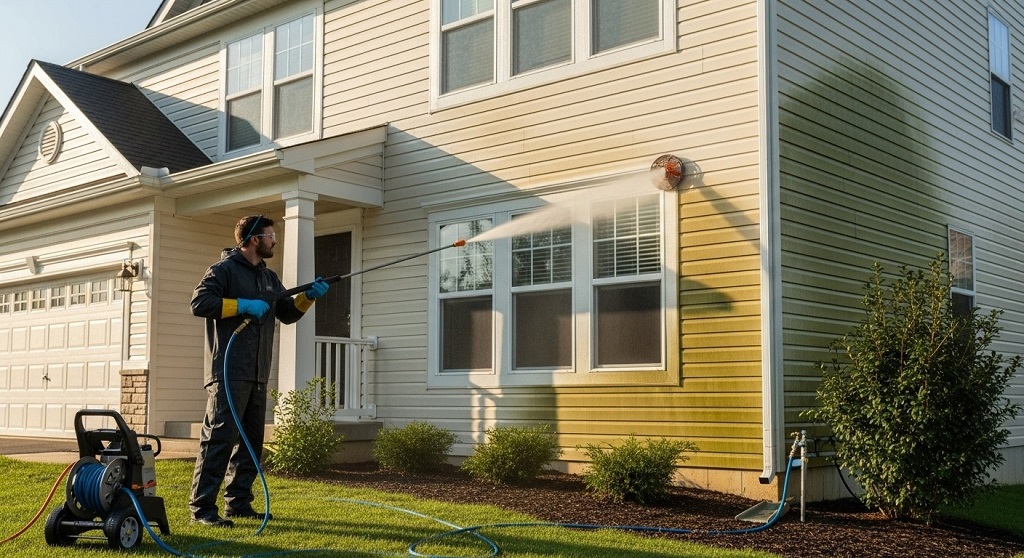
Short answer: 2–4 hours for an average-sized home.
Time varies based on:
- House size and height
- Surface material
- Level of contamination
Professionals prioritize thoroughness over speed.
Is pressure washing safe for all siding types?
Short answer: Yes, when adjusted correctly.
- Vinyl: Low pressure, wide nozzle
- Wood: Soft wash preferred
- Brick: Moderate pressure, avoid mortar joints
- Stucco: Very low pressure only
Surface-specific technique matters more than machine power.
How often should you pressure wash a house?
Short answer: Once every 12–18 months.
Homes in humid or shaded environments may need annual cleaning due to mold growth.
What is the best way to pressure wash a house safely?
The best way to pressure wash a house is to follow a professional system. Low pressure. Proper detergent. Correct angles. Patience.
Rushing causes damage. Overpowering causes repairs. Process creates results.
When done correctly, pressure washing improves appearance, prevents long-term decay, and prepares your home for painting or sealing.
If you want lasting results, stop guessing and start following the method outlined above.
CTA: Bookmark this guide, share it with your team, or consult a professional if you’re unsure. One correct wash saves years of exterior damage.
Frequently Asked Questions About Pressure Washing a House
Can you pressure wash a house with just water?
No. Water alone removes surface dirt but does not kill mold or algae roots.
Is pressure washing better than soft washing?
Both methods work. Soft washing is safer for delicate surfaces. Pressure washing is effective for durable exteriors.
Can pressure washing damage windows?
Yes, if sprayed directly at close range. Always keep distance and angle downward.
Should you pressure wash before or after repairs?
Before. Cleaning reveals hidden damage that needs fixing.
Is DIY pressure washing worth it?
Yes, if done correctly. Mistakes can cost more than hiring a professional.
Can pressure washing remove paint?
Yes. High pressure strips loose or failing paint.
Related Topics: Compact Power Tools Guide: Featuring G LAXIA Mini Circular Saw
Related Topics: Green Home Improvements That Are Good for Your Wallet
