





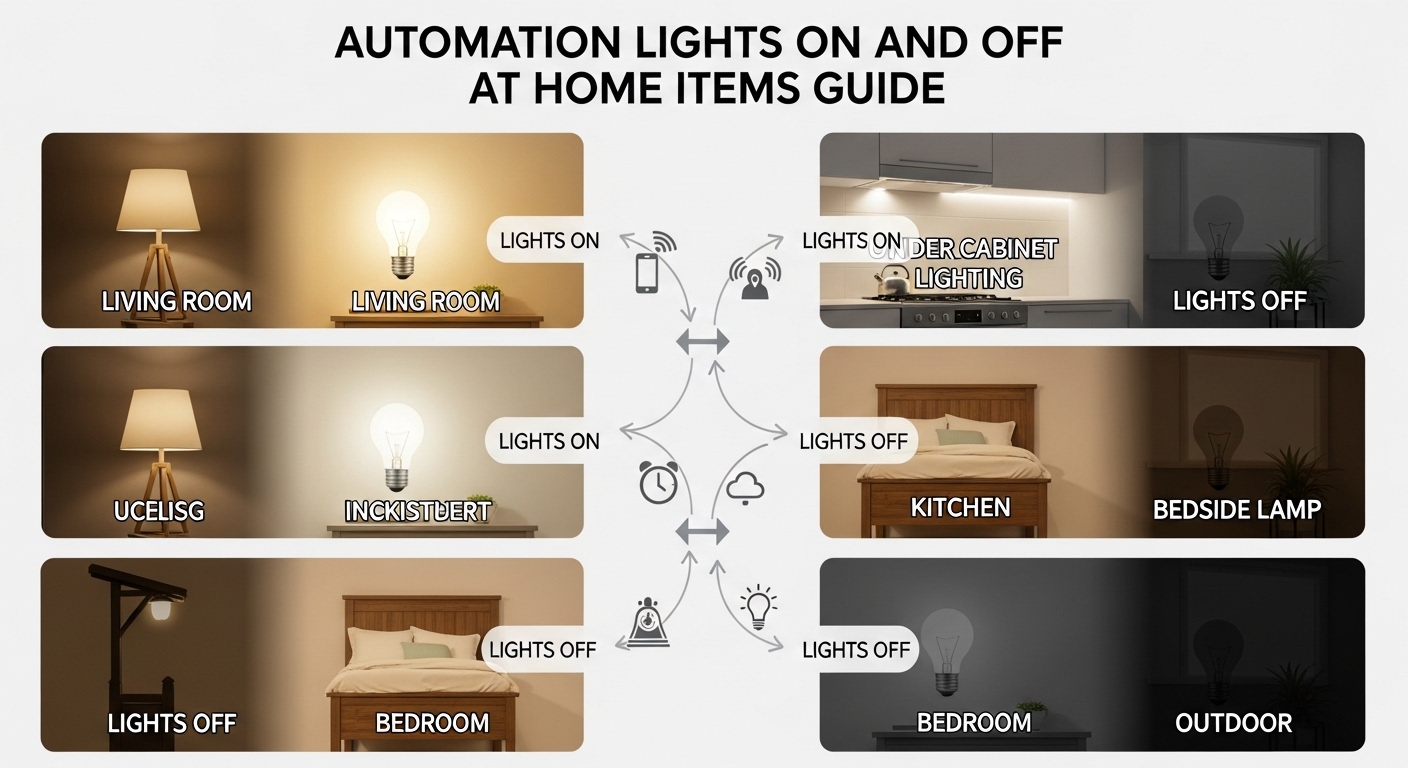
Automation Lights On and Off at Home Items Guide
Walking into a dark room and searching for switches wastes time and energy. Leaving lights on overnight increases electricity bills. Manual control is outdated when affordable automation lights on and off at home items now make lighting intelligent, efficient, and secure.
Modern lighting automation does more than convenience. It improves safety, reduces energy waste, and supports smart home integration. With motion sensors, timers, smart switches, and voice assistants, anyone can automate lighting without complex wiring or technical experience.
This guide explains the most effective automation items, how they work, what they cost, and how to choose the right solution for your home.
What are automation lights on and off at home items?
Snippet Answer: Automation lights on and off at home items are devices like smart switches, motion sensors, timers, smart bulbs, and home automation hubs that automatically control lighting based on schedules, movement, daylight levels, or remote commands, improving convenience, energy efficiency, safety, and smart home integration.
Answer Block: Automation lights on and off at home items are devices that automatically control lighting using schedules, motion detection, smartphone apps, or voice assistants. These tools replace manual switching and help reduce electricity waste while improving comfort, security, and convenience inside modern homes.
Lighting automation includes several device types working independently or together. Some solutions operate offline using timers. Others connect through Wi-Fi or Zigbee networks.
Automation devices activate lighting based on conditions. These conditions include presence detection, time schedules, sunrise and sunset triggers, or app commands.
Common automation lighting devices include:
- Smart light switches
- Motion sensor lights
- Smart bulbs
- Timer switches
- Smart plugs
- Home automation hubs
These items allow homeowners to control lighting remotely. They also support automation routines like turning lights off when leaving home or activating hallway lights during nighttime movement.
Lighting automation improves safety by preventing dark areas indoors and outdoors. It also reduces electricity consumption by eliminating unnecessary lighting usage.
Which devices automatically turn lights on and off at home?
Answer Block: The most common devices that automatically control home lighting include smart switches, motion sensors, timer switches, smart bulbs, and smart plugs. Each device offers different automation methods such as scheduling, movement detection, remote control, or voice activation through assistants.
Different lighting automation devices serve different purposes. Choosing the right one depends on installation complexity, budget, and automation goals.
| Device Type | Automation Method | Best Use Case | Installation Difficulty |
|---|---|---|---|
| Smart Switch | App or voice control | Whole-room automation | Medium |
| Motion Sensor | Movement detection | Bathrooms and hallways | Easy |
| Timer Switch | Scheduled timing | Outdoor lighting | Easy |
| Smart Bulb | Wireless control | Bedrooms and living rooms | Very easy |
| Smart Plug | Remote switching | Table lamps | Very easy |
Motion sensors are ideal for high-traffic areas. Smart switches suit full-room automation. Smart bulbs work best for renters who cannot modify wiring.
Combining multiple devices creates layered automation. For example, a motion sensor activates lights while a timer ensures shutdown after inactivity.
How do motion sensor lights automate home lighting?
Answer Block: Motion sensor lights detect movement using infrared or microwave sensing technology and automatically switch lights on when someone enters a room and off after inactivity. They reduce electricity waste, improve nighttime visibility, and increase home security without manual interaction.
Motion sensors use passive infrared technology to detect body heat movement. Some advanced sensors combine microwave detection for higher accuracy.
These sensors trigger lighting instantly when someone enters a space. After a preset delay, lights turn off automatically.
Typical installation locations include:
- Bathrooms
- Staircases
- Garages
- Entryways
- Outdoor pathways
Motion sensors reduce unnecessary energy use. They also improve safety by illuminating dark areas automatically.
Modern sensors include daylight detection features. This prevents activation when natural light is already sufficient.
Wireless motion sensors are especially useful in rental homes because they require no electrical rewiring.
Are smart switches better than smart bulbs for automation?
Answer Block: Smart switches are better for controlling entire lighting circuits and maintaining wall-switch functionality, while smart bulbs provide flexible wireless automation without wiring changes. The better choice depends on whether users want permanent room automation or portable lighting control.
Smart switches replace traditional wall switches. They allow automation through apps and voice assistants.
Smart bulbs install directly into lamp holders. They connect wirelessly and support brightness adjustment and scheduling.
Smart switches provide advantages such as:
- Control of multiple bulbs simultaneously
- Lower long-term cost per room
- Reliable automation even without internet
Smart bulbs provide benefits including:
- Color temperature adjustment
- No electrician required
- Ideal for apartments
Switches suit permanent homes. Bulbs suit flexible setups.
Many households combine both for maximum automation efficiency.
Can timer switches automate lights without internet?
Answer Block: Timer switches automate lighting without internet by activating lights based on preset schedules stored inside the device. They provide reliable automation for outdoor lights, security lighting, and daily routines without requiring Wi-Fi or smartphone connectivity.
Timer switches operate using mechanical or digital scheduling systems. Users program on and off times directly on the device.
These switches are useful for predictable lighting needs. Examples include evening porch lights or garden lights.
Advantages include:
- No internet dependency
- Stable performance
- Low installation cost
- Simple configuration
Digital timers allow weekday scheduling differences. Mechanical timers repeat the same schedule daily.
Timer switches also improve home security by simulating occupancy during travel.
This creates the appearance that someone is inside the house even when empty.
What smart plugs do for automatic light control?
Answer Block: Smart plugs automate lamps and lighting fixtures by allowing users to control power through mobile apps, schedules, or voice assistants. They enable lighting automation without replacing switches or bulbs and are ideal for quick, beginner-friendly smart home upgrades.
Smart plugs connect between a wall socket and lighting device. They instantly add automation features.
Users can schedule lights to turn on before arriving home. They can also switch lights off remotely after leaving.
Smart plugs support automation scenarios such as:
- Sunset activation
- Vacation mode lighting
- Wake-up routines
- Energy-saving schedules
Most smart plugs integrate with assistants like Alexa or Google Assistant. This enables voice-based lighting control.
Smart plugs are ideal entry-level automation devices. They require no electrical expertise.
Do smart home hubs improve lighting automation efficiency?
Answer Block: Smart home hubs improve lighting automation efficiency by connecting multiple devices into a single control system that enables advanced routines, cross-device communication, and faster response times compared to standalone smart lighting devices operating independently.
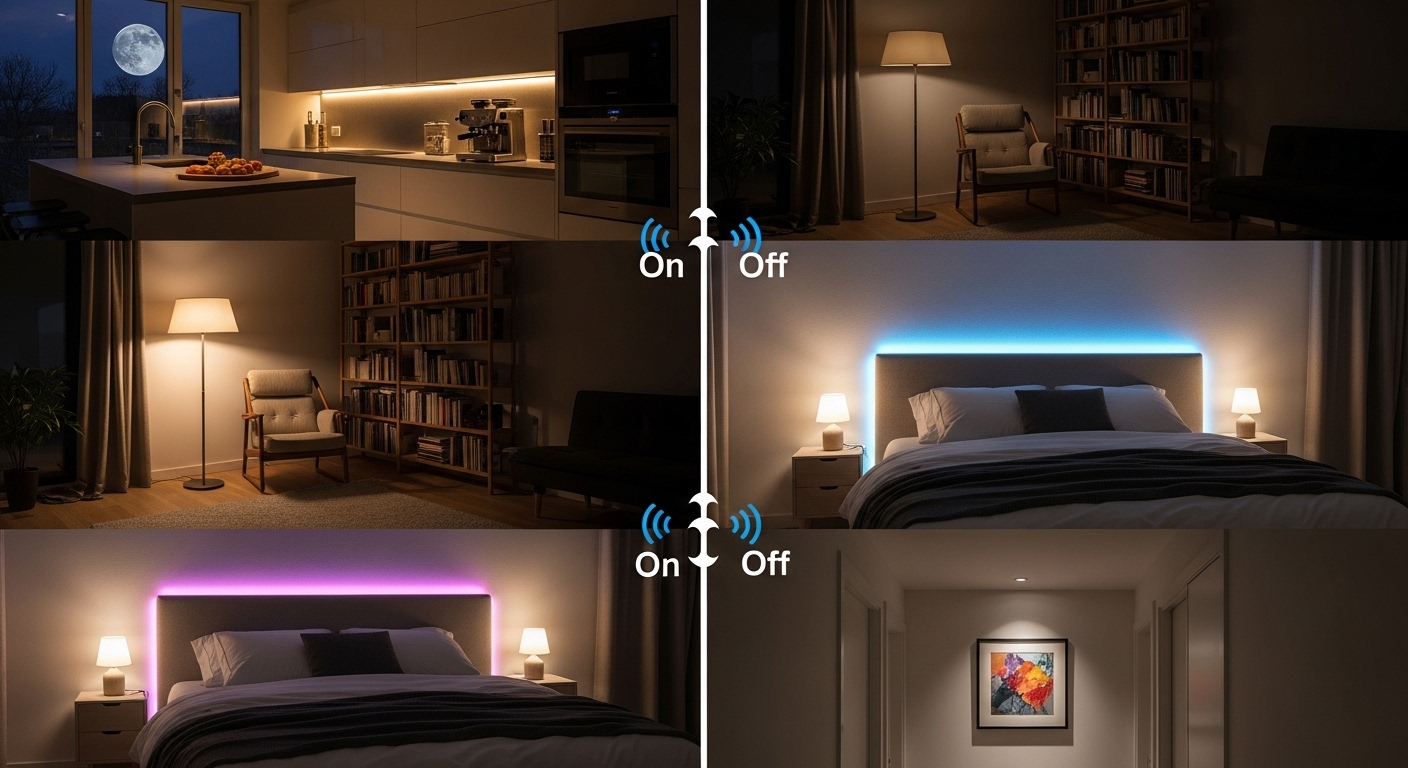
Smart hubs act as central automation controllers. They connect switches, sensors, bulbs, and plugs into one network.
This allows advanced automation rules such as:
- Turn hallway lights on when door opens
- Activate bedroom lights at sunset
- Switch off all lights when leaving home
- Dim lights during movie mode
Hubs reduce Wi-Fi congestion because many use Zigbee or Z-Wave communication.
They also increase automation reliability. Devices continue working even if internet connectivity drops.
Smart hubs are recommended for homes with multiple automation devices.
How much do automation lighting items cost for beginners?
Answer Block: Automation lighting items for beginners typically cost between $10 and $60 per device depending on type. Smart plugs and bulbs are the most affordable entry points, while smart switches and hubs require higher initial investment but provide long-term automation benefits.
Automation lighting is now accessible for most households.
Typical beginner pricing includes:
- Smart plugs: $10–$25
- Smart bulbs: $12–$40
- Motion sensors: $15–$50
- Timer switches: $10–$30
- Smart switches: $25–$60
Starting with one room automation reduces upfront cost. Expansion can happen gradually.
Energy savings often offset device costs within months.
Most users begin with smart plugs or motion sensors before upgrading to full smart switch systems.
Conclusion: What is the best way to automate home lighting today?
Manual lighting control increases energy waste and reduces comfort. Automation lights on and off at home items solve this problem using sensors, schedules, and smart connectivity.
Motion sensors improve safety. Smart plugs simplify entry-level automation. Timer switches provide offline reliability. Smart switches enable full-room control. Smart hubs unify everything into a single intelligent system.
The best approach is starting small. Automate one room first. Then expand gradually based on lifestyle needs.
Lighting automation saves electricity, increases security, and improves convenience immediately after installation.
Choose one automation device today and begin building a smarter home environment step by step.
Frequently Asked Questions
What is the easiest lighting automation device to install?
Smart plugs are the easiest lighting automation devices because they require no wiring changes and allow instant scheduling and remote control through mobile apps.
Do motion sensor lights work during daytime?
Most modern motion sensor lights include daylight sensors that prevent activation when natural light levels are already sufficient.
Can lighting automation reduce electricity bills?
Yes, lighting automation reduces electricity bills by preventing unnecessary lighting usage and automatically turning lights off when rooms are empty.
Do smart switches require internet to function?
Smart switches can operate manually without internet, but automation schedules and remote control features typically require network connectivity.
Are automation lighting devices safe for older homes?
Yes, wireless smart bulbs and plugs are safe options for older homes because they do not require electrical rewiring.
Can automated lighting improve home security?
Automated lighting improves security by simulating occupancy and illuminating entry points when motion is detected.
Is a smart hub necessary for lighting automation?
A smart hub is not required for basic automation but improves performance and enables advanced routines across multiple devices.
Read More Also: How to Decorate a One Bedroom Apartment for Affordable Living
Learn More: How to Fix a Clogged VAV Heating Coil in an HVAC System
