





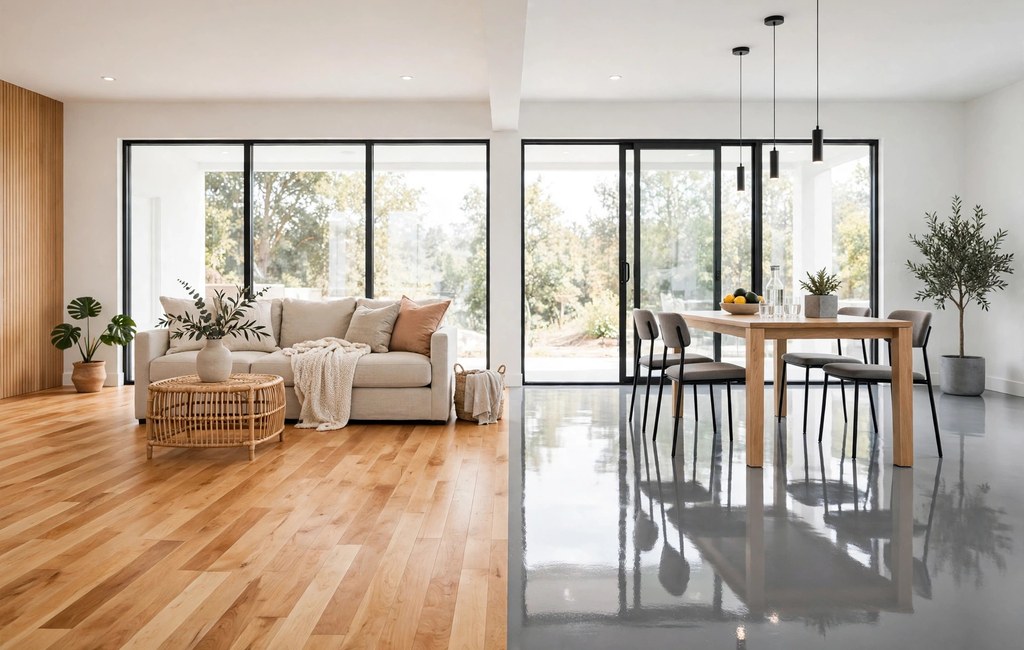
Hardwood, Epoxy and Commercial Floors: When to Refinish, Resurface or Replace
Your floor takes more abuse than any other surface in your building. Every footstep, dropped pan, rolling cart, and spilled drink leaves a mark, and most people ignore the damage until it becomes expensive. A gym floor that was gorgeous five years ago now has dull patches and splinters. A garage slab is stained and dusty. A restaurant kitchen has slick tiles and cracked grout that an inspector will spot in seconds.
The good news is that you rarely need to tear everything out. Choosing between refinishing, resurfacing, coating, and replacing can save thousands of dollars and months of downtime. This guide walks through five common flooring decisions, from hardwood gym floors to epoxy and commercial kitchen flooring, so you can match the right fix to the real problem.
Hardwood Gym Floor Refinishing: When to Refinish vs. Replace Your Floor
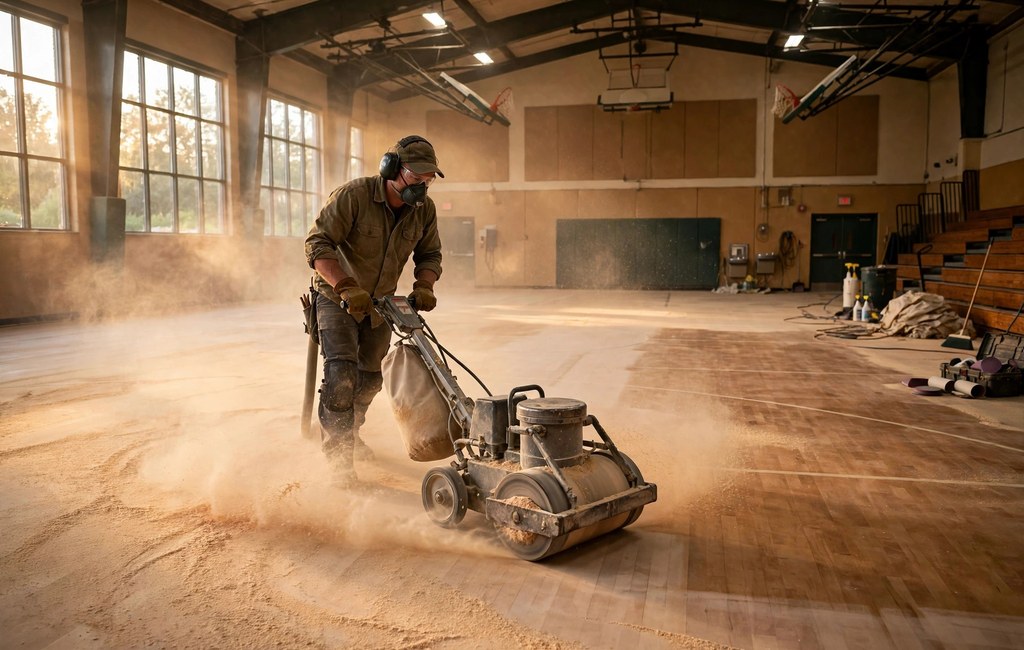
A maple gym floor is one of the most durable surfaces ever installed, and it is built to be renewed. Because the boards are thick, a quality hardwood floor can be sanded and recoated many times over its lifetime. The real question is whether your floor still has enough life left to justify refinishing.
Refinish when the damage sits in the finish. Typical signs include:
- Dull, cloudy, or scuffed areas where traffic is heaviest
- Faded court lines and logos
- Minor surface scratches that do not reach bare wood
- A slippery or sticky feel after cleaning
- Small dents that sanding can level
A standard screen-and-recoat removes the top layer of worn finish and applies fresh coats of polyurethane. It is the most affordable option and usually takes only a few days.
Consider a full sand and refinish when the finish has worn through to raw wood or the court graphics need repainting. This strips the floor to bare wood, repairs minor flaws, and rebuilds the finish from the ground up.
Replace when the structure fails. Sanding cannot fix problems underneath the surface. Replacement becomes the smarter investment if you see:
- Widespread cupping, buckling, or warped boards
- Dead spots, soft areas, or a floor that no longer feels springy
- Moisture damage, mold, or subfloor rot
- Boards sanded so many times that the tongue-and-groove is exposed
- Repair costs approaching the price of a new system
As a rule of thumb, if more than roughly a quarter of the floor needs structural repair, replacement usually wins on long-term value. A flooring contractor can check board thickness and moisture levels before you decide.
Gym Floor Resurfacing: When Is It Time to Restore Your Floor?
People use “refinishing” and “resurfacing” interchangeably, but in the gym world resurfacing usually means sanding down the entire floor and applying a new finish system. It is the middle step between a light recoat and a full replacement.
Time to resurface if:
- The last recoat is several years old. Most schools and recreation centers recoat every one to three years and fully resurface about every ten years, depending on traffic.
- Recoating no longer sticks. Built-up finish, wax, or cleaning residue can cause poor adhesion and peeling.
- Players complain about traction. An uneven or slick surface raises the risk of slips and sprained ankles.
- Court lines have faded or the layout changed. Resurfacing is the perfect moment to add new line markings for basketball, volleyball, or pickleball.
- Scratches and gouges are widespread. Spot repairs only go so far.
Skipping maintenance raises the bill. A floor that is recoated on schedule keeps its thickness and lasts for decades, while one left unattended may need replacement far sooner. Keep a simple log of cleaning, recoating, and humidity readings so you can plan ahead.
Why More Homeowners Are Choosing Residential Epoxy Floors
Epoxy used to be a warehouse material. Today it shows up in garages, basements, laundry rooms, home gyms, and even open-plan living spaces. The reason is simple: a residential epoxy floor solves problems that concrete, tile, and vinyl struggle with.
Durability. Epoxy bonds to the concrete slab and creates a hard, seamless layer that resists hot tires, oil, and heavy tools.
Easy cleaning. With no grout lines or seams, spills wipe up quickly and dust has nowhere to hide. That matters for allergy-conscious households.
Design freedom. Homeowners can choose solid colors, metallic swirls, decorative flakes, or quartz blends. A garage can look like a showroom without costing as much as stone or porcelain.
Value. A well-installed epoxy coating often lasts a decade or more in a home, which makes the cost per year competitive with carpet or tile.
Before you commit, remember that results depend on preparation. Moisture in the slab, old paint, or cracks can cause peeling if they are not handled. Professional installers grind the concrete, repair damage, and test moisture levels before coating. Epoxy can also be slippery when wet, so ask about anti-slip additives for garages and entryways.
Commercial Epoxy Floors: The Ultimate Guide for Business Owners
For a business, flooring is not only about looks. It affects safety, hygiene, productivity, and operating costs. Commercial epoxy floors are popular in warehouses, showrooms, auto shops, medical offices, schools, and manufacturing plants because they handle punishing conditions.
Common types of commercial epoxy systems:
- Self-leveling epoxy: Creates a smooth, glossy surface for showrooms and retail spaces.
- Epoxy mortar: A thick, heavy-duty system for repairing damaged concrete and carrying heavy loads.
- Epoxy flake systems: Add texture and color for traction and stain hiding.
- Anti-static epoxy: Protects sensitive electronics in labs and server rooms.
- Chemical-resistant coatings: Suited to industrial plants and workshops.
Benefits for business owners:
- Seamless surfaces that are easier to sanitize
- Resistance to forklift traffic, chemicals, and impact
- Brighter spaces, since reflective floors improve lighting
- Safety markings and color-coded zones painted right into the floor
- Lower maintenance than carpet, tile, or bare concrete
What to ask a contractor: How will the slab be prepared? Which system fits your traffic and chemical exposure? What is the cure time, and can work happen after hours to limit downtime? What warranty is offered? Getting clear answers prevents costly redo jobs.
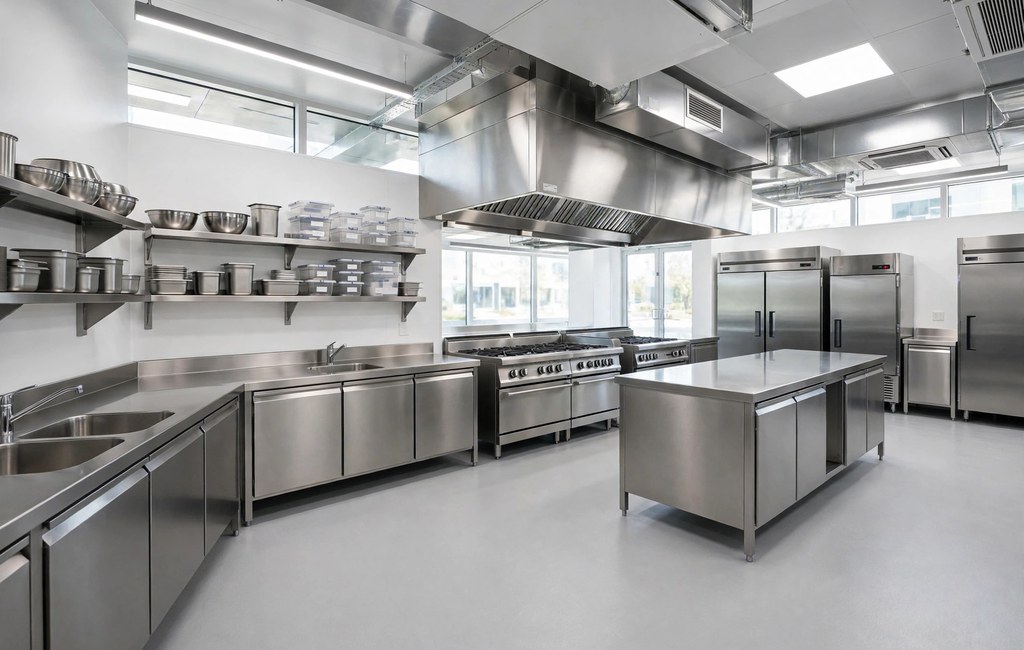
Best Commercial Kitchen Flooring Options for Safety and Durability
A commercial kitchen is one of the toughest environments a floor will ever face. It deals with grease, hot water, acidic spills, heavy equipment, and constant foot traffic. The wrong surface leads to slips, bacteria buildup, and failed inspections.
Look for these qualities: slip resistance, non-porous surfaces, seamless or tightly sealed joints, heat and chemical resistance, and good drainage.
Top options:
- Quarry tile: The traditional choice. It is durable and slip resistant, but grout lines can trap bacteria unless sealed with epoxy or urethane grout.
- Urethane cement: A favorite in food processing. It handles thermal shock from hot water and steam, and it is seamless.
- Epoxy with broadcast aggregate: Cost-effective and easy to clean, with texture for traction. Best for dry or moderate-heat areas.
- Commercial vinyl or rubber mats: Useful at prep stations to reduce fatigue, but they should be lifted and cleaned regularly.
- Polished sealed concrete: Low maintenance, though it needs added traction in wet zones.
The best choice depends on how hot, wet, and greasy your kitchen gets. Check local health codes and talk to an installer experienced with food-service spaces. Daily degreasing, prompt spill cleanup, and anti-fatigue mats where staff stand all day extend floor life.
How to Decide: A Quick Checklist
Use these questions before you call a contractor:
- Is the damage in the surface or in the structure?
- How heavy is the traffic, and how soon will it come back?
- Are there moisture, chemical, or heat concerns?
- What does downtime cost your business or household?
- Does the repair cost approach 50 to 60 percent of replacement?
If the problems are mostly cosmetic, refinish, resurface, or coat. If the foundation is compromised, replace.
Frequently Asked Questions
How often should a hardwood gym floor be refinished?
Most facilities recoat every one to three years and do a full sand and refinish roughly every ten years, depending on use and maintenance.
How long does gym floor resurfacing take?
A recoat can finish in two to three days. A full resurfacing with new court lines typically takes a week or more, including cure time.
Is epoxy a good choice for a home garage?
Yes, when the slab is prepared properly. It resists stains and hot tire pickup, and it cleans easily. Add an anti-slip additive for safety.
How long do commercial epoxy floors last?
With good preparation and moderate traffic, many last five to ten years or longer. Heavy industrial use may need recoating sooner.
What is the safest flooring for a commercial kitchen?
A slip-resistant, non-porous, seamless surface such as urethane cement or textured epoxy, installed with proper drainage, is generally the safest.
Can I walk on a new floor right away?
Not usually. Light foot traffic may be allowed after 24 hours, but full curing for vehicles and heavy equipment can take several days.
Final Thoughts and Your Next Step
The right flooring decision comes down to diagnosing the problem honestly. Surface wear calls for refinishing or resurfacing. Structural failure calls for replacement. Demanding homes and businesses benefit from epoxy and other seamless systems that stand up to daily abuse.
Ready to find out where your floor stands? Schedule a free on-site assessment with a licensed flooring professional, bring photos of the problem areas, and ask for a written comparison of refinishing, resurfacing, and replacement costs. A short inspection today can save you thousands tomorrow.
