





How to Pick the Right Tree Trimming Tools for Home Gardening
Keeping trees healthy and well-shaped is one of the most rewarding parts of home gardening. Trimming removes dead branches, encourages new growth, and keeps your outdoor space looking its best. However, walking into a garden centre and facing an entire wall of cutting tools can feel overwhelming.
The right tool makes the job easier, safer, and faster. The wrong one can damage your trees, strain your hands, and leave you frustrated. The good news is that choosing correctly is straightforward once you understand a few key principles.
This guide walks you through everything you need to know about selecting the right tree trimming tools for your garden, from small hand tools to larger saws, so that every cut you make counts.
Understanding Why the Right Tool Matters
Using the wrong tool for a trimming job causes more harm than most gardeners realise. A blade that is too small for a thick branch will tear the wood rather than cut it cleanly. Torn cuts heal slowly and leave the tree vulnerable to disease and pests.
On the other hand, using a heavy, oversized tool for a delicate job reduces your control and increases the risk of cutting more than you intended. Additionally, the wrong tool tires your hands and arms faster, which leads to sloppy cuts late in a session.
Therefore, matching the tool to the task protects both your trees and your energy. The first step is understanding what each type of tool is designed to do.
Getting to Know the Main Types of Tree Trimming Tools
Tree trimming tools fall into a few clear categories. Each one is built for a specific range of branch sizes and trimming situations. Knowing the differences makes it much easier to build the right toolkit for your garden.
Hand Pruners
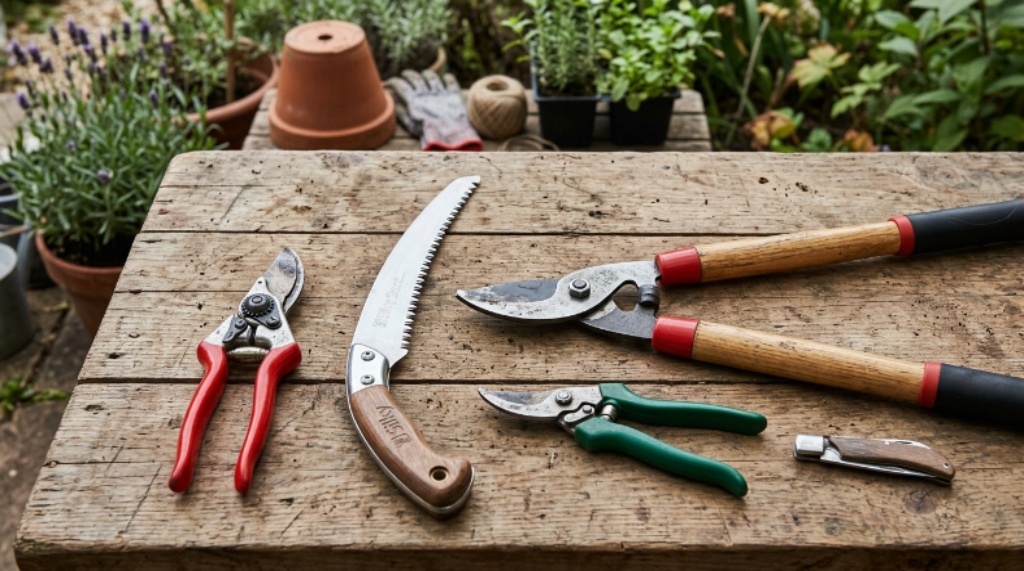
Hand pruners, also called secateurs, are the most commonly used trimming tool in any garden. They are small, lightweight, and designed for branches up to about 2 centimetres in diameter. Most gardeners use them constantly, from shaping shrubs to removing small deadwood from ornamental trees.
There are two main styles. Bypass pruners use two curved blades that pass each other like scissors. They create clean, precise cuts and are the better choice for living wood. Anvil pruners have a single straight blade that closes onto a flat plate. They are slightly more powerful but can crush soft stems if not used carefully. For most home gardeners, bypass pruners are the recommended starting point.
Loppers
Loppers look like oversized hand pruners with long handles. Those extended handles give you more leverage and reach, allowing you to cut branches between 2 and 5 centimetres thick with much less effort. They are ideal for reaching into the interior of a shrub or cutting lower branches on young trees without needing a ladder.
Like hand pruners, loppers come in bypass and anvil designs. The same principles apply. Bypass loppers produce cleaner cuts and are generally better for tree work. Additionally, many modern loppers feature geared mechanisms that increase cutting force by up to three times, making them a good option for gardeners with limited hand strength.
Pruning Saws
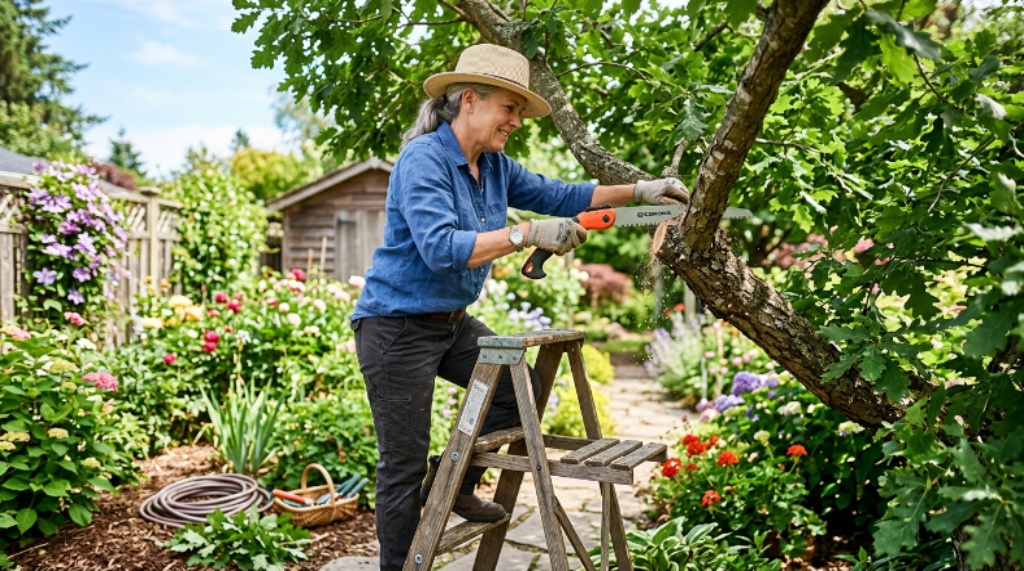
A pruning saw is the right choice when a branch is too thick for loppers but does not require a chainsaw. Most pruning saws handle branches from 5 centimetres up to 15 centimetres or more, depending on the model.
Unlike a standard woodworking saw, a pruning saw is designed to cut on both the push and pull stroke, or in many folding models, on the pull stroke only. This makes them more efficient in tight spaces between branches. The teeth are coarser and set wider apart than a regular saw, which prevents the blade from binding in green, moist wood.
A folding pruning saw is a smart choice for home gardeners. It collapses safely for storage and transport, fits comfortably in a garden bag, and is available in a wide range of blade lengths to suit different jobs. For most domestic tree trimming tasks, a blade between 25 and 35 centimetres covers everything you are likely to encounter.
Hedge Shears
Hedge shears are designed for trimming hedges and shaping small leafy shrubs rather than cutting individual branches. They have long, flat blades and long handles that let you sweep across a surface quickly. They are not suitable for branches thicker than a pencil, but for maintaining shape and tidiness across a large area, nothing works faster.
Manual hedge shears are quiet, lightweight, and require no power source. Electric or battery-powered versions reduce physical effort significantly on larger hedges. However, powered shears require more care around cables and demand greater attention to blade safety.
Pole Pruners and Pole Saws
Some branches are simply out of reach from the ground. Climbing a ladder to trim a tree is one of the most common causes of garden injuries. Pole pruners and pole saws attach cutting heads to extendable handles, allowing you to reach branches several metres above ground while keeping both feet safely on the floor.
Pole pruners use a pruner head operated by a rope or cord mechanism. Pole saws attach a saw blade to the end of the pole. Many modern models combine both functions on a single pole. Therefore, for any tree that requires regular overhead work, a quality pole pruner is a worthwhile investment.
Matching Your Tools to Your Garden’s Needs
Understanding tool types is only half the picture. The other half is knowing what your specific garden requires. A small courtyard garden with ornamental trees has very different needs from a large property with mature oaks or fruit trees.
For Small Gardens with Ornamental Trees
A good pair of bypass hand pruners and a folding pruning saw will handle almost everything a compact garden demands. Add a pair of loppers if you have shrubs that regularly grow thick stems, and you have a complete set. These garden cutting tools take up minimal storage space and are easy to maintain.
For Medium Gardens with Mixed Trees and Shrubs
A medium garden benefits from a fuller toolkit. Include bypass hand pruners, bypass loppers with a geared mechanism, a folding pruning saw with a blade of at least 30 centimetres, and a pair of hedge shears. This combination covers fine pruning, medium branch removal, and hedge maintenance across a varied planting scheme.
For Large Gardens or Properties with Mature Trees
Larger properties and more mature trees introduce branches that require more reach and more cutting power. A pole pruner with an attachable saw head becomes essential for upper canopy work. You may also want a bow saw for removing larger sections of deadwood on the ground. For the heaviest work, hiring a professional arborist is always the safest choice.
Key Features to Look for When Buying Trimming Tools
Once you know which types of tools you need, focus on quality and design features that will determine how long they last and how comfortable they are to use.
Blade Material and Sharpness
High-carbon steel blades hold a sharper edge for longer than cheaper alternatives. Some tools feature hardened or coated blades that resist rust and stay sharp through extended use. A sharp blade makes cleaner cuts, which is better for tree health and easier on your joints.
Handle Comfort and Grip
Trimming sessions can last an hour or more. Comfortable handles make a genuine difference to fatigue levels. Look for handles with soft, non-slip grips that cushion vibration. Ergonomic designs that reduce wrist strain are particularly valuable for anyone who uses tools frequently or has joint sensitivity.
Weight and Balance
A well-balanced tool feels lighter in use than its actual weight suggests. Pick up tools in the shop before buying if possible. A tool that feels heavy and awkward in the store will feel worse after 30 minutes of use in the garden. Lightweight materials like aluminium handles reduce overall weight without sacrificing strength.
Ease of Maintenance and Cleaning
Garden tools last far longer when they are cleaned and sharpened regularly. Look for tools with removable blades or replaceable parts. Additionally, some pruners and loppers come with adjustment screws that let you tune the tension of the cutting action. This is a small feature that extends the useful life of the tool considerably.
Safety Habits Every Home Gardener Should Follow
Even the best tools cause injuries when used carelessly. A few simple habits keep you safe during every trimming session.
- Always wear thick gardening gloves when handling cutting tools.
- Keep blades pointing away from your body when carrying tools between tasks.
- Never place a folded pruning saw or closed pruner in a pocket without a protective cover.
- Inspect tools before each use for loose screws, cracks, or damaged blades.
- Keep children and pets away from your working area during any trimming session.
Additionally, clean and dry your tools after every use. Sap, dirt, and moisture accelerate corrosion and dull blades faster than regular use alone. A quick wipe with an oily cloth takes seconds and adds years to the life of your equipment.
Conclusion
Choosing the right tree trimming tools does not need to be complicated. Start by identifying the branch sizes and types of trimming your garden requires. Then build your toolkit around those specific needs, beginning with a reliable pair of bypass hand pruners and a folding pruning saw as your foundation.
Pay attention to blade quality, handle comfort, and overall balance when comparing options. A well-made set of garden cutting tools will serve you reliably for many years with proper care. Invest in the tools that suit your garden, look after them consistently, and trimming will become one of the most satisfying parts of your gardening routine rather than a chore you put off.
Your trees deserve clean, precise cuts. With the right tools in your hands, every trim becomes a step toward a healthier, more beautiful garden.
Frequently Asked Questions
What is the difference between a pruning saw and a regular handsaw?
A pruning saw is specifically designed to cut green, living wood. Its teeth are shaped and spaced to clear sawdust from moist wood without binding. A regular handsaw is designed for dry timber and will clog and stick badly in fresh tree branches.
How do I know when to use hand pruners versus loppers?
Use hand pruners for branches up to about 2 centimetres in diameter. Move to loppers for anything between 2 and 5 centimetres. If the branch is thicker than 5 centimetres, a pruning saw is the right choice. Using the correct tool for the size prevents damage to both the branch and the tool.
How often should I sharpen my garden trimming tools?
Sharpen hand pruners and loppers at least once per season, or more frequently if you do heavy pruning. A pruning saw typically stays sharp for several seasons with proper cleaning. You will know it needs attention when the blade starts to tear rather than slice through wood cleanly.
Is it worth buying expensive branded tools over budget options?
For hand pruners and loppers that you use regularly, quality brands are worth the investment. Premium tools use better steel, last significantly longer, and are usually repairable when parts wear out. For occasional-use tools like pole saws, mid-range options often provide good value.
What is the safest way to trim branches overhead without a ladder?
A pole pruner or pole saw is the safest solution for overhead branches. These extendable tools allow you to work from ground level on branches several metres above you. Always wear eye protection when cutting overhead, as debris and sawdust fall directly downward.
