





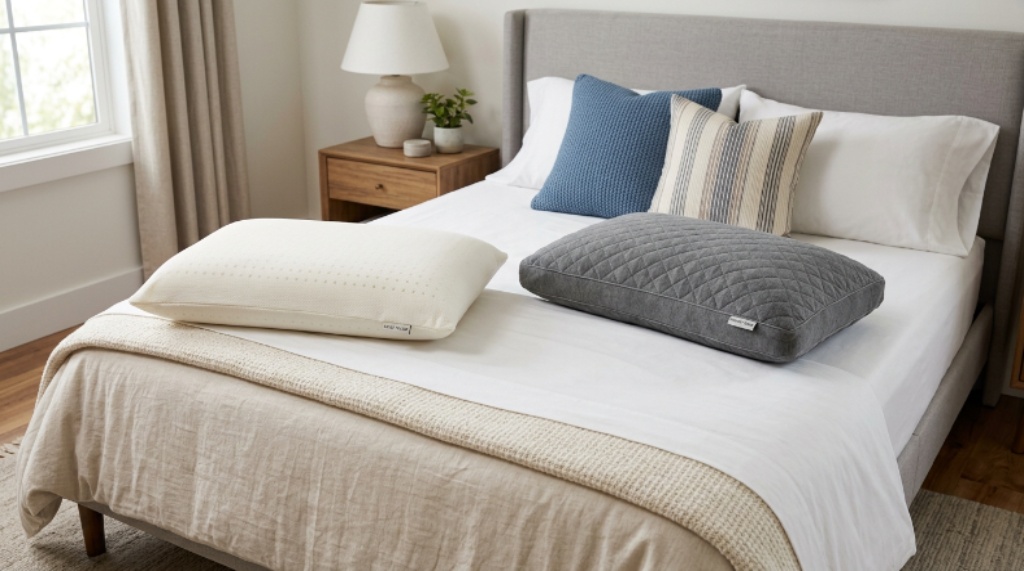
Latex Pillow vs Memory Foam: Which Is Better for Comfortable Sleep?
Getting a good night’s sleep starts with the right pillow. Most people spend years on the same pillow without ever questioning whether it truly supports them. However, once you start comparing options, the differences become clear. Two of the most popular choices today are latex pillows and memory foam pillows. Both have loyal fans, and both have real drawbacks.
This article breaks down everything you need to know about each type. By the end, you will have a clear picture of which pillow suits your sleep style, health needs, and budget.
Understanding What Each Pillow Is Made Of
Before comparing them, it helps to understand what these pillows are actually made from.
Latex pillows come from rubber tree sap. The sap is processed into a foam-like material that is naturally springy and resilient. There are two main types: natural latex and synthetic latex. Natural latex is the more premium and eco-friendly option. Synthetic latex mimics the feel but uses chemical compounds instead.
Memory foam, on the other hand, is a synthetic material originally developed by NASA. It is made from polyurethane and responds to heat and pressure. When you lay your head on it, the foam slowly molds around your shape. When you lift your head, it gradually returns to its original form.
Both materials offer unique properties. Therefore, understanding those properties is the first step in making a smart decision.
How They Feel to Sleep On
Feel is one of the most personal aspects of choosing a pillow. What feels perfect to one person may feel all wrong to another.
Latex pillows have a buoyant, responsive quality. They push back gently against your head and neck. This gives a sensation sometimes described as floating rather than sinking. The material snaps back into shape almost instantly when you move. This makes it easy to shift positions throughout the night without feeling stuck.
Memory foam has a completely different feel. It contours slowly and precisely to the shape of your head. Many people love this cradling sensation. However, some sleepers find it too enveloping, especially those who tend to sleep hot or change positions frequently.
Additionally, latex feels more consistent throughout the night. Memory foam can feel firmer in cooler temperatures and softer when the room is warm. This fluctuation bothers some sleepers more than others.
Sleep Support and Spinal Alignment
Good pillow comparison always comes back to one core question: does it keep your spine aligned while you sleep?
Both pillows can provide excellent sleep support, but they do it differently.
Latex pillows offer uniform support across the entire surface. The material does not compress unevenly under pressure. This means your head and neck stay at a consistent height throughout the night. For side sleepers, this is particularly valuable. It keeps the cervical spine straight and reduces the chance of waking up with a stiff neck.
Memory foam pillows offer precise contouring support. They adapt exactly to the curve of your neck, which can relieve pressure points effectively. Back sleepers often find memory foam pillows especially comfortable for this reason. The foam fills the natural gap between the neck and the mattress without any effort.
However, both types come in different firmness levels. Therefore, the best choice depends on your sleeping position as much as the material itself.
Temperature and Breathability
One major complaint about memory foam is heat retention. Traditional memory foam traps body heat because the dense structure limits airflow. This can make the pillow feel uncomfortably warm during the night.
Manufacturers have responded by adding gel layers or open-cell foam technology to improve cooling. However, these additions do not always solve the problem completely.
Latex naturally allows better airflow. Many latex pillows also feature perforations throughout the core. These small holes encourage air circulation and help the pillow stay cooler. For people who sleep hot or live in warm climates, this is a meaningful advantage.
Therefore, if temperature regulation is a priority for you, latex generally performs better than standard memory foam. However, gel-infused or ventilated memory foam options narrow that gap considerably.

Durability and Longevity
A pillow is an investment. Knowing how long each type lasts helps you calculate real value over time.
Latex pillows are exceptionally durable. Natural latex especially resists breaking down over time. A high-quality latex pillow can last anywhere from five to ten years or more. The material does not develop the dips or flat spots that affect cheaper pillows. Additionally, it retains its shape and support level consistently throughout its lifespan.
Memory foam pillows typically last three to five years. Over time, the foam can compress permanently in the areas that bear the most weight. When this happens, the pillow no longer provides the same level of support it once did. However, higher-density memory foam lasts longer than lower-density versions.
For long-term value, latex generally wins. The upfront cost may be higher, but the lifespan often justifies the difference.
Allergies and Health Considerations
Your health needs should influence your pillow choice significantly.
Natural latex is hypoallergenic and resistant to dust mites, mold, and mildew. This makes it a strong choice for allergy sufferers and people with asthma. However, it is worth noting that some individuals have a true latex allergy. For those people, any latex product carries a health risk and should be avoided entirely.
Memory foam is also resistant to dust mites, which is a genuine benefit. However, new memory foam pillows can emit a chemical odor when first unpacked. This is called off-gassing, and it results from the volatile organic compounds in the foam. The smell typically fades within a few days, but it can be bothersome for sensitive individuals.
Additionally, memory foam is not a natural material. For people who prefer organic or eco-conscious products, latex — especially natural latex — is often the preferred choice among memory foam alternatives.
Weight and Ease of Use
Practical considerations matter too. Latex pillows are noticeably heavier than memory foam pillows. This can make them harder to adjust during the night. Flipping or folding a latex pillow takes more effort than doing the same with a lighter memory foam option.
Memory foam pillows are lighter and easier to handle. They are also available in a wider variety of shapes, including contoured designs made specifically for neck support or side sleepers. Furthermore, they are often easier to find in stores and come at a wider range of price points.
Price and Value
Budget is a practical reality for most buyers. Latex pillows, especially those made from natural latex, cost more than most memory foam options. A quality natural latex pillow can range from sixty to over one hundred fifty dollars. Synthetic latex falls somewhere in the middle.
Memory foam pillows are widely available at many price points. Basic options start under thirty dollars, while premium versions with advanced cooling technology can exceed one hundred dollars. Therefore, memory foam is more accessible for buyers working with a tight budget.
However, given the longer lifespan of latex, the cost per year of use often works out to be comparable or even lower.
Which Pillow Is Right for You?
There is no single answer that works for everyone. The best choice depends on your specific needs.
Choose a latex pillow if you sleep hot, move around frequently, prefer natural materials, or want a pillow that will last many years. It also suits people with common allergies who need a hypoallergenic option.
Choose a memory foam pillow if you prefer a contouring, cradling feel, sleep mostly in one position, are working with a smaller budget, or want a wide variety of shapes and firmness levels to choose from.
Conclusion
Both latex and memory foam pillows can deliver comfortable, well-supported sleep. However, they suit different types of sleepers. Latex offers natural materials, better temperature regulation, and impressive durability. Memory foam provides precise contouring, broader availability, and lower entry-level pricing.
When it comes to sleep support, both options outperform cheap, low-quality pillows by a wide margin. The right pillow comparison always comes down to your sleeping position, health needs, temperature preferences, and budget. Additionally, considering the long-term value of your purchase — not just the sticker price — leads to a smarter decision.
Whichever you choose, investing in a quality pillow is one of the most impactful changes you can make for your nightly rest.
Frequently Asked Questions
Is a latex pillow better than memory foam for neck pain?
Latex pillows provide consistent, uniform support that keeps the spine aligned throughout the night. However, memory foam contours precisely to the neck’s curve. Either can help with neck pain, but latex is often preferred by side sleepers and those who change positions frequently.
Do latex pillows sleep cooler than memory foam?
Yes, in most cases. Latex naturally allows better airflow, and many latex pillows include ventilation holes. Traditional memory foam traps heat, though gel-infused or open-cell memory foam options offer improved cooling.
How long does a latex pillow last compared to memory foam? A high-quality latex pillow typically lasts five to ten years or more. Memory foam pillows generally last three to five years before losing their original support level.
Are latex pillows safe for people with allergies?
Natural latex is hypoallergenic and resistant to dust mites, mold, and mildew. However, people with a true latex allergy should avoid latex pillows entirely and consider memory foam alternatives instead.
Which pillow is better for side sleepers?
Latex pillows are generally a strong choice for side sleepers because they maintain consistent height and push back evenly against the head and neck. Contoured memory foam pillows designed specifically for side sleeping also work well. Firmness level matters just as much as material type.
