




What Are the Best Pillows for Hot Sleepers?
Waking up in the middle of the night soaked in sweat is frustrating, exhausting, and disrupts the deep sleep your body needs to recover. If you sleep hot, you already know that your mattress and bedding play a major role in temperature regulation, but the pillow resting directly under your head matters just as much. Traditional memory foam and down pillows tend to trap heat, turning your sleeping surface into a warm pocket. This article breaks down exactly what makes a pillow sleep cool, which materials actually work, and how to choose the right one for your sleeping position so you can finally get uninterrupted, comfortable rest without overheating.
Key Takeaways
- Heat retention is often caused by dense materials like traditional memory foam that trap body heat, while breathable gels, phase-change materials, and perforated latex actively wick warmth away.
- Your sleeping position dictates the ideal loft—not just the cooling feature—to ensure proper spinal alignment and airflow.
- Machine-washable covers and moisture-wicking fabrics like Tencel or nylon blends are essential for maintaining a clean, dry, and hygienic sleep surface.
- A pillow that offers dual-sided firmness or adjustable fill allows you to fine-tune both temperature and support as seasons change.
Why Do Some Pillows Trap Heat?
The primary reason some pillows feel unbearably warm is their internal structure. Traditional viscoelastic memory foam is made from a dense, closed-cell polymer that responds to body heat by softening. While this contouring is great for pressure relief, the material inherently absorbs and holds onto that heat because the cell structure does not allow for significant air movement. When you press your head into the foam, you create a heat sink that has nowhere to dissipate easily.
In contrast, pillows designed for hot sleepers use either open-cell foam technologies, gel-infused beads that absorb heat rather than reflect it, or natural materials like wool and latex, which possess hollow fibers or open-cell structures that promote airflow. Understanding this basic difference is the first step in eliminating night sweats that originate from your pillow rather than your environment.
What Materials Actually Keep You Cool?
Gel-Infused and Phase-Change Materials
Gel-infused memory foam uses micro-beads intended to draw heat away from your head. However, there is a distinct difference between standard gel and phase-change materials (PCMs). Standard gel inclusions often provide a slight temperature-neutral feel but may stop working once they warm to your body temperature. PCMs, conversely, are engineered to absorb, store, and release heat as your body temperature fluctuates, keeping a stable microclimate around your head throughout the night. If you prioritize active cooling, look for pillows explicitly listing PCM technology rather than just generic “cooling gel.”
Perforated Latex and Ventilated Foam
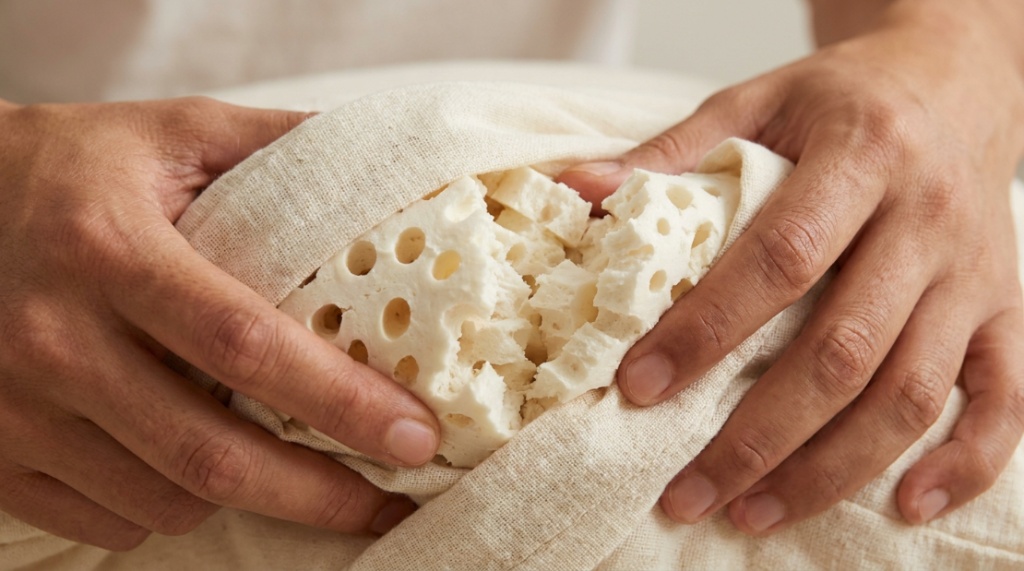
Natural latex boasts an open-cell structure and contains thousands of microscopic air bubbles. When manufacturers add pinholes or deeper ventilation channels across the block, the airflow dramatically increases. These designs allow heat and moisture to escape through the core of the pillow rather than pooling beneath your neck. Latex tends to be firmer and more resilient than foam, providing a “bouncy” feel that stays cool without excessive sinkage.
Breathable Covers: More Than Just a Case
Even the most breathable core won’t help if the cover traps heat. The outer shell serves as your immediate contact layer. Cotton with a tight percale weave is crisp but lacks superior wicking if you sweat heavily. Synthetic weaves like Outlast (PCM-infused) or blends using Tencel™ (derived from eucalyptus) are excellent choices because they pull moisture away from the skin and evaporate it quickly. Avoid waterproof or polyester-heavy mattress protectors on your pillow, as they act as a vapor barrier that negates cooling properties.
When you’re narrowing down your options, keep in mind that excellent temperature regulation is useless if the pillow fails to support your cervical spine properly. You can find a comprehensive guide to top-performing, breathable options that combine pressure relief with active cooling in our curated list of the best pillows for hot sleepers, which assesses heat dissipation performance alongside durability in warm climates. That intersection of support and airflow is where you will find your ideal night’s sleep.
Which Loft Height Fits Your Sleeping Position?
Cooling technology only works effectively if the pillow keeps your head correctly aligned. If you are too low or too high, you will turn and shift more frequently, disrupting airflow and increasing friction heat. Position specific requirements are essential:
- Back Sleepers: You do not need excessive lift. A medium loft (typically 4–5 inches) supports the natural C-curve of your neck without pushing your chin toward your chest. A lower loft allows more surrounding air to circulate around your face.
- Stomach Sleepers: You require the thinnest profile available (2–3 inches) to prevent neck strain. A thinner pillow is also inherently cooler because there is less dense material under your head to trap heat.
- Side Sleepers: You need the highest loft (5–6 inches) to bridge the distance between your ear and your shoulder. Ensure the fill is compressible enough to contour fully, but firm enough that your head isn’t swallowed—a fully compressed pillow traps more body heat.
A common mistake is assuming a “cooling” label allows you to buy a thick pillow as a side sleeper, or that a thin pillow is only for stomach sleepers. Always match the loft to your build, generally measured by the width of your shoulder. Wider individuals typically need a higher wrist-to-shoulder distance measured when lying on your side.
The Reality About “Bed Head” and Moisture Wicking
Overheating isn’t only about temperature; it is also about humidity. When you rest your head, you generate a micro-environment of moisture from perspiration and respiration. Eventually, sweat soaks into the fill, breaking down the structural integrity of foam over time and harboring dust mites. This is where wicking fabrics come into play. Even if you have a high-quality cooling core, an unbreathable outer shell will trap that humidity. Wicking literally moves moisture from the skin to the fabric’s surface, where it disperses and evaporates. Look for covers that have an open weave and have passed specific breathability tests but avoid loosely-woven covers that allow feather or fiber fill to poke through.
Common Mistakes Hot Sleepers Make
Several frequent missteps undermine the best intentions when buying a pillow for temperature control. Recognizing these can save you money and discomfort:
- Chasing “Ice” Gels: The cooling gel pads applied to the top layer of a pillow are very effective for the first 30 to 60 minutes. However, they often have a high thermal mass—meaning once the gel absorbs your body heat, it stays warm for hours without a mechanism to disburse that heat. Focus on breathable interiors, not just topical gels.
- Ignoring Cover Weight: You may purchase a pillow labeled “cooling,” but it comes with a heavy 100% cotton cover. Cotton can be dense enough to inhibit airflow. Check the thread count; down-proof sateen covers above 600 thread count frequently sleep warmer than those under 300 due to their tight weave.
- Buying Pillows Without Returns: Cooling is entirely subjective based on your unique body chemistry and night sweat patterns. Only purchase from retailers that allow you to test the pillow for at least 30 days. A pillow that is cool to the touch in the store may still sleep hot for you after a week of use.
How to Evaluate Pillow Firmness for Nighttime Cooling
There is a physiological relationship between firmness and heat. An overly soft pillow causes your head to sink too deeply into the material, covering more surface area of your face and neck with the fill. This reduces air exposure to your skin, creating a localized hot spot. Medium-firm compression is generally optimal for cooling because it cradles the neck slightly, keeping the head above the pillow surface rather than embedded in it. When you sleep “on top of” the pillow rather than “inside” it, you maintain a better airflow gap.
Comparing Pillow Types by Heat Retention
To simplify your consideration process, the table below compares standard material classes based on their typical sleep temperature characteristics. This acts as a general guideline, as specific manufacturing technologies vary.
| Pillow Fill Type | Heat Retention Level | Cooling Mechanism | Best Suited For |
|---|---|---|---|
| Shredded Memory Foam | Medium | Air pockets between shreds | Adjustable fill; often combines support with some airflow |
| Traditional Solid Memory Foam | High | Very little unless gel/PCM infused | Sleepers who prioritize contour and don’t typically warm up |
| Latex (Talaxy or Dunlop) | Low | Open-cell structure and pin-core holes | Hot sleepers needing resilient support and “lift” |
| Bamboo-Derived Rayon | Variable | Breathable fiber but often depends on inner core | Eco-conscious sleepers; often plush |
| Buckwheat Hulls | Very Low | Naturally hollow hulls allow air circulation | Sleepers wanting firmness and maximum airflow (with noise) |
| Down and Feather | Medium/High | Traps body heat easily; needs high-quality cotton casing | People who love a “sink-in” feel but may struggle with sweat |
Pay attention to the fill weight. A buckwheat pillow can be cool, but it is heavy. A latex pillow breathes effortlessly but might be too high or heavy to shift during the night if you toss and turn. Ensure the pillow’s total weight doesn’t limit your ability to reposition yourself.
Frequently Asked Questions
Are cooling gel pillows effective all night?
Most basic cooling gel pads are not effective all night because the gel becomes saturated with your body heat and has no way to dissipate that heat without active airflow or phase-change dynamics. For all-night cooling, choose a pillow with an open-cell construction and breathable latex rather than depending solely on a surface gel layer, Struggling with neck discomfort while trying to stay cool? find relief with a wa support pillow to ensure proper spinal alignment all night long.
Does higher thread count mean better for hot sleepers?
No. A higher thread count (above 600) usually indicates a much denser weave, which restricts airflow and traps more body heat. For hot sleepers, look for a cotton percale weave or bamboo rayon blend with lower thread counts (200–400) that allows better ventilation, or specifically labeled breathable proprietary weaves.
Can a pillow cover alone solve overheating?
A pillow protector can help, but it won’t solve the root cause. If your core pillow is made from heat-trapping foam, a cover will only postpone heat buildup by a few minutes. You need both a breathable core and a breathable, absorbent cover to significantly lower your temperature at night.
Is a cooling pillow a fix for sleep apnea or night sweats?
No. While a cooling pillow adds comfort, night sweats can be a symptom of underlying medical conditions such as sleep apnea, thyroid disorders, or infections. A pillow cannot cure these. If you experience drenching sweats unrelated to room temperature, consult a healthcare professional.
How often should I replace my cooling pillow?
On average, pillows should be replaced every 1.5 to 2 years. A cooling pillow should naturally lose its performance sooner if you sweat heavily. If you notice the fabriced layers bunching, permanent yellowing, or that washing doesn’t remove the odor, it’s time for a new one.
Conclusion
Choosing the best pillow for overheating is not about finding the most expensive “ice-tech” gimmick on the shelf; it is about balancing airflow, moisture-wicking properties, and proper postural support. Prioritize breathable, open-core materials over solid dense foams, opt for a PCM-treated surface rather than pure gel, and ensure the loft level matches your sleeping position to help you stay dry and aligned through the night.
When you begin shopping, test your new pillow with your normal cotton or bamboo sheets rather than flannel or polyester covers. If you often wake up with heat rashes, damp hair, or stiff necks, make cooling pillows your next necessary upgrade—not an eventual luxury you’ll get around to. Pay attention to the return policy; sleep quality is deeply personal, and trying a pillow out in your home environment is the only real way to know if you’ve ended your night-sweat cycle for good.
