






How to Build Better Study and Work Habits
Key Takeaways
- Set clear goals so every session has a purpose.
- Link new habits to routines you already follow.
- Start small, because tiny actions are easier to repeat.
- Remove distractions and use short, focused work blocks.
- Rest well, track progress, and be patient with yourself.
Everyone wants to work smarter. However, good intentions often fade after a few days. The reason is simple. Habits, not motivation, drive long-term results. Research supports this idea. According to a study by Phillippa Lally and colleagues at University College London, it took an average of 66 days for a new behavior to become automatic. Therefore, patience matters as much as effort. This guide shows you how to build better study and work habits step by step.
Set Clear Goals and Simple Routines
Habits start with direction. If you do not know what you want, you cannot plan how to get it. Therefore, begin by writing down what you want to achieve.
Use specific goals instead of vague wishes. For example, “study more” is unclear. However, “review my notes for 30 minutes after dinner” is easy to follow. Additionally, set a deadline so your goal feels real.
Next, connect your new habit to something you already do. Researchers call this habit stacking. For instance, you might open your planner right after you pour your morning coffee. As a result, the old habit acts as a reminder for the new one.
Consider these goal-setting steps:
- Choose one main goal. Too many goals lead to weak effort.
- Break it into small tasks. Smaller steps feel less stressful.
- Pick a fixed time. Regular timing helps the habit stick.
- Write it down. Written plans are easier to follow than mental ones.
Furthermore, keep your routine simple. A long, complex plan is hard to maintain. Instead, start with one or two actions. Once they feel natural, add more. Finally, prepare the night before. Lay out your books, files, or tools so you can begin right away.
Start Small and Stay Consistent
Big changes often fail. People try to study for three hours on day one, then quit by day four. Therefore, a smaller start works better.
Try the two-minute rule. Make your new habit so small that it takes about two minutes. For example, read one page or write one paragraph. This approach removes the fear of starting. Moreover, once you begin, you often continue longer.
Consistency matters more than intensity. Twenty minutes every day beats a long session once a week. Your brain builds strong habits through repetition. Consequently, showing up daily is the real secret.
Life will sometimes get in the way. However, one missed day does not ruin your progress. The Lally study found that missing a single day did not harm habit formation. So, simply return to your routine the next day.
Use these tools to stay on track:
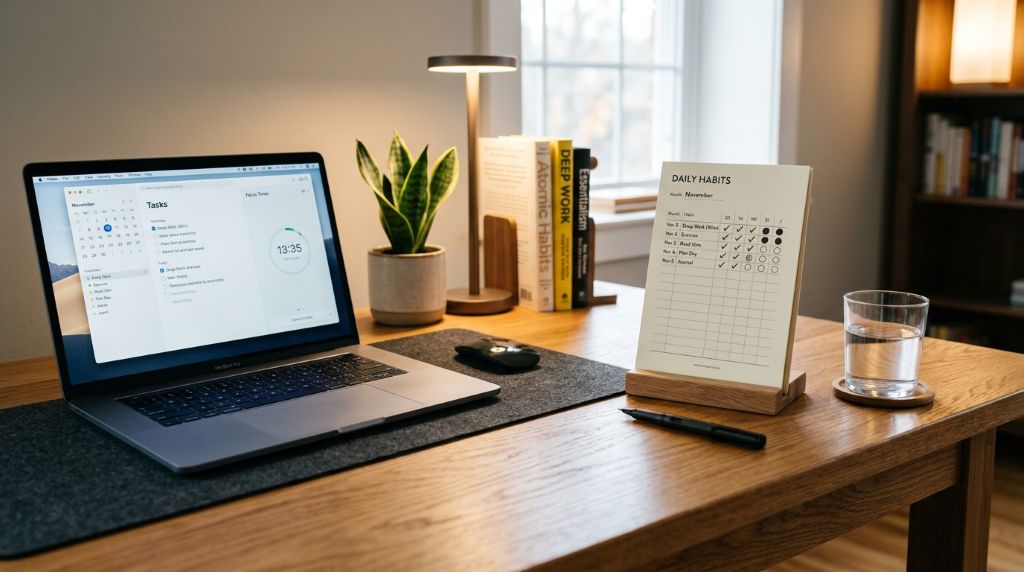
- Habit tracker: Mark each completed day on a calendar or app.
- Accountability partner: Share your goal with a friend or coworker.
- Small rewards: Enjoy a favorite drink or short walk after each session.
- Visible reminders: Place sticky notes where you will see them.
Additionally, track your wins each week. Seeing progress builds pride and keeps you moving. Over time, small actions add up to large results.
Improve Your Focus and Manage Distractions
Focus is the core of good study and work habits. However, distractions are everywhere. Phones, messages, and noise all pull your attention away. Therefore, you need clear rules to protect your time.
Start with your space. Choose a tidy, quiet spot and keep only the items you need. Additionally, put your phone in another room or switch on a focus mode. Studies show that even a silent phone in view can reduce attention.
Next, work in short, focused blocks. The Pomodoro method is a popular choice. You work for 25 minutes, then rest for five. After four rounds, take a longer break. As a result, big tasks feel easier to start and finish.
Try these focus habits:
- Write down your top three tasks each morning.
- Do the hardest task first, while your energy is high.
- Turn off alerts for email and social media.
- Use one tab or one app at a time.
- Keep a notepad nearby for stray thoughts.
Moreover, avoid multitasking. Switching between tasks slows you down and increases mistakes. Instead, finish one task before you begin another. If a new idea appears, jot it down and return to your work. Consequently, you protect your focus without losing good ideas.
Look After Your Body and Mind
Strong habits need a healthy base. If you are tired or stressed, even good plans fall apart. Therefore, treat rest as part of your routine.
Sleep comes first. The Centers for Disease Control and Prevention advises adults to sleep at least seven hours each night. Teenagers need even more, about eight to ten hours. Without enough sleep, memory and focus suffer. Consequently, late-night cramming often backfires.
Movement also helps. A short walk or light stretch improves blood flow and mood. In addition, regular breaks prevent mental fatigue. Stand up every hour and drink water often.
Food matters too. Balanced meals give steady energy, while heavy snacks can make you sleepy. Therefore, eat protein, fruit, and whole grains when you can.
Finally, manage stress with simple tools:
- Deep breathing: Take five slow breaths before a hard task.
- Short walks: Fresh air can clear your mind.
- Time off: Keep at least one rest period each week.
- Reflection: Write down what went well each day.
Additionally, be kind to yourself. Building habits takes time, and setbacks are normal. Review what worked, adjust your plan, and try again. This attitude keeps you moving forward.
Conclusion
Better habits do not appear overnight. Instead, they grow from clear goals, small actions, steady focus, and good rest. Start with one habit, repeat it daily, and track your progress. Simple comfort can also support consistency—for example, you may choose a memory foam reading pillow for long reading sessions if reading is part of your daily routine. Moreover, expect slow growth and enjoy each small win. According to research, most habits need about two months to feel automatic, so patience pays off.
Take action today. Choose one habit from this guide and practice it for the next seven days. Then share your goal in the comments below. Subscribe to our newsletter for more practical study and work tips.
Frequently Asked Questions
How long does it take to build a new habit?
It varies. A University College London study found an average of 66 days, with a range from 18 to 254 days.
What is the best way to start a study habit?
Start small. Study for just 10 to 15 minutes at the same time each day. Then increase the time slowly.
How can I stay focused while studying or working?
Remove distractions, silence your phone, and use short work blocks. The Pomodoro method is a simple option.
What should I do if I miss a day?
Return to your routine the next day. One missed day will not ruin your progress, so avoid guilt and keep going.
Do I need motivation to build good habits?
Not always. Motivation comes and goes, so rely on routines, reminders, and small steps instead.
I can also put this post in a file if you’d like one.
