



How to Build the Perfect Restaurant Cleaning Setup for Hygiene and Efficiency
Why a Proper Cleaning Setup Matters in a Restaurant
Running a restaurant is more than just great food and good service. Cleanliness is at the heart of every successful operation. A dirty kitchen can lead to health code violations, customer complaints, and even forced closures. Therefore, setting up the right cleaning system is not optional — it is essential.
A well-planned cleaning setup saves time. It also keeps staff productive and customers safe. When your team knows exactly what tools to use and where to find them, they can clean faster and more thoroughly. The result is a kitchen that runs like a well-oiled machine.
This guide walks you through everything you need to build a complete and effective restaurant cleaning setup from scratch.
Start with a Cleaning Zone Plan
Before buying any equipment, map out your restaurant. Divide it into cleaning zones. Common zones include the kitchen, food prep area, dining room, restrooms, storage rooms, and the entryway.
Each zone has different cleaning needs. The kitchen, for example, requires heavy-duty degreasers and high-temperature sanitizers. The dining room needs lighter surface cleaners and frequent floor attention. Planning your zones first helps you buy the right tools for each area without wasting money.
Additionally, a zone plan helps you assign tasks clearly. Staff will know their responsibilities. This reduces confusion during busy shifts and ensures no area gets overlooked.
Choosing the Right Hygiene Tools for Every Area
The backbone of any cleaning setup is a strong collection of hygiene tools. These are the everyday items your team reaches for during and after every shift. Choosing the right ones makes a big difference in both cleanliness and speed.
Here are the core hygiene tools every restaurant needs:
- Microfiber cloths for wiping down surfaces without spreading bacteria
- Color-coded cleaning cloths to prevent cross-contamination between zones
- Long-handled scrub brushes for reaching tight spots in the kitchen
- Spray bottles clearly labeled for each type of cleaning solution
- Mops with replaceable heads for quick changeovers during busy periods
- Squeegees for wet kitchen floors after deep cleaning sessions
Color coding is especially important. Use red cloths in restrooms, blue in the dining area, and yellow in the kitchen. This simple system stops germs from spreading between areas without anyone even thinking about it.
Furthermore, stock enough tools for each zone. Do not move equipment from one area to another. Keeping tools separate is one of the easiest ways to maintain hygiene standards across your restaurant.
The Role of Floor Cleaning Machines in Commercial Kitchens
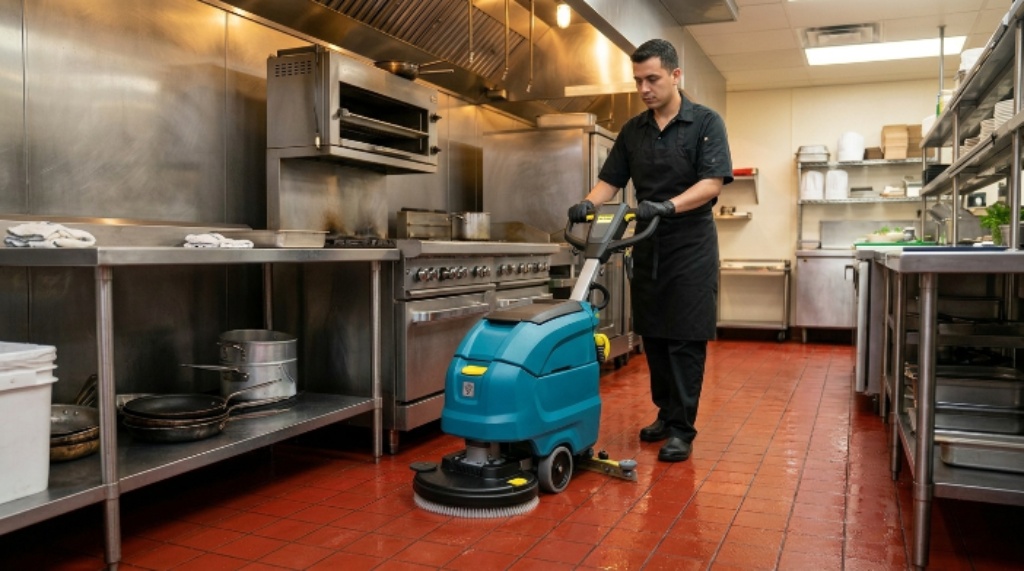
Floors take a serious beating in a restaurant. Grease, food spills, foot traffic, and moisture all combine to make floors one of the hardest surfaces to keep clean. Manual mopping alone is rarely enough for a busy commercial kitchen.
This is where floor cleaning machines become a game changer. These machines go far beyond what a mop can do. They scrub, rinse, and dry the floor in a single pass. As a result, your team spends less time on floors and more time on other tasks.
There are three main types of floor cleaning machines suitable for restaurants:
Walk-behind scrubbers are ideal for medium to large kitchens. They are easy to operate and cover a lot of ground quickly. Most models have adjustable brush pressure, which lets you clean both light dirt and stubborn grease.
Ride-on scrubbers work best in very large spaces like cafeterias or hotel kitchens. However, they are not practical for most standard restaurant kitchens due to their size and cost.
Compact scrubber-dryers are perfect for smaller spaces. They clean and dry the floor at the same time, which reduces slip hazards. These are a smart choice for fast-paced restaurants where safety is a constant concern.
When choosing a floor cleaning machine, consider the size of your space, the type of flooring, and your cleaning schedule. Tile floors with heavy grout lines, for example, need a machine with stiff bristle brushes. Smoother floors may only need softer pads.
Exploring Vacuum Options for Dining Areas and Dry Spaces
Not every part of a restaurant needs wet cleaning. Dining rooms, waiting areas, and some storage spaces benefit more from dry cleaning. This is where having the right vacuum options in your setup becomes important.
A good vacuum keeps carpets, upholstered seating, and dry tile floors free of crumbs, dust, and allergens. This matters a lot in dining areas where customers notice cleanliness immediately.
Here are the main vacuum options restaurants typically use:
Upright vacuums are great for carpeted dining areas. They are powerful and easy to push across large surfaces. Many commercial models come with HEPA filters, which trap fine dust particles and allergens.
Backpack vacuums offer excellent mobility. Staff can carry them easily and move between tables quickly. These are popular in restaurants with many tight spaces and furniture arrangements.
Wet-dry vacuums are versatile machines that handle both dry debris and liquid spills. They are especially useful in transitional spaces between the kitchen and dining room. Therefore, keeping one on hand adds a layer of flexibility to your setup.
Canister vacuums work well for stairs, upholstered booths, and hard-to-reach corners. They are quieter than uprights, which is helpful when cleaning near customers during service hours.
The best strategy is to combine vacuum types based on your layout. Use a backpack model for daily floor passes and keep a wet-dry vacuum nearby for unexpected spills.
Organizing and Storing Your Cleaning Equipment
Having the right tools means nothing if they are not organized. A cluttered cleaning closet leads to wasted time, damaged equipment, and frustrated staff. Therefore, storage is a key part of your overall setup.
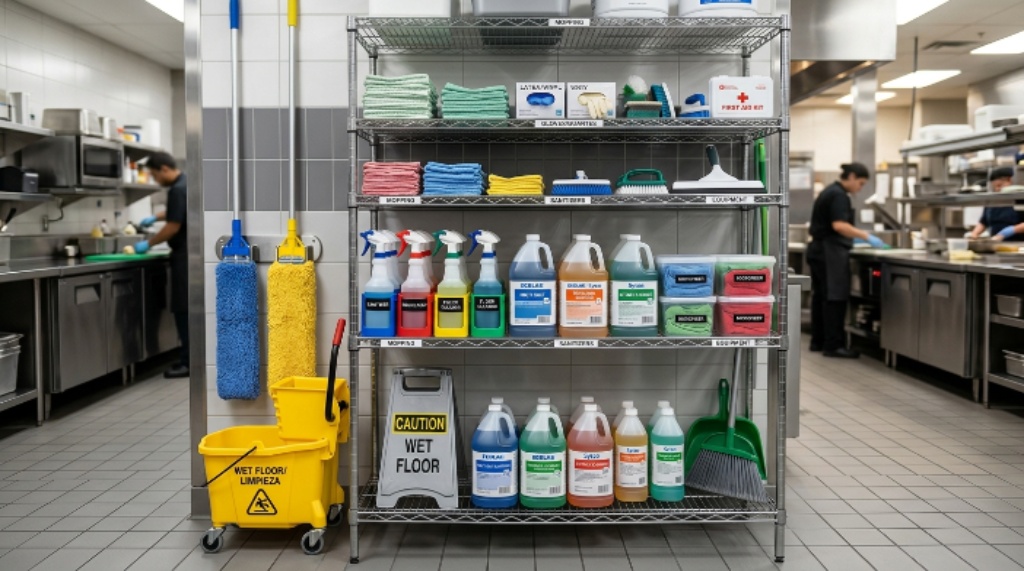
Dedicate a specific room or cabinet to cleaning supplies. Install wall-mounted holders for mops and brooms so they stay off the floor. Use labeled shelves for chemicals and make sure all containers are sealed properly.
Store floor cleaning machines in a dry, accessible area with enough space to maneuver them in and out easily. Charge battery-powered scrubbers overnight so they are always ready for the next shift.
Additionally, create a daily and weekly cleaning checklist that stays posted near the storage area. This gives your team a clear reference point. It also makes it easier for managers to track what has been done and what still needs attention.
Building a Cleaning Schedule That Works
Equipment alone will not keep your restaurant clean. You need a consistent schedule that matches the pace of your operation.
Break your schedule into four time frames:
During service: Wipe surfaces constantly, clean spills immediately, and empty waste bins when needed.
After each shift: Mop all kitchen floors, sanitize prep surfaces, clean fryers and grills, and empty grease traps.
Daily deep clean: Use floor cleaning machines on all hard floors, clean behind equipment, and sanitize walk-in coolers.
Weekly tasks: Degrease exhaust hoods, scrub tile grout, wash walls, and inspect all equipment for buildup.
Stick to this schedule every week without exception. Consistency is what separates truly clean restaurants from those that only appear clean on the surface.
Conclusion
Building the perfect restaurant cleaning setup takes planning, the right equipment, and a committed team. Start by mapping your zones, then stock each area with appropriate hygiene tools. Invest in quality floor cleaning machines for your kitchen and heavy-use areas. Choose the right vacuum options for dry spaces like dining rooms and waiting areas. Finally, organize your supplies well and follow a consistent cleaning schedule.
When all these pieces come together, your restaurant becomes a safer, healthier, and more efficient place to work and dine. Cleanliness builds customer trust. It also protects your staff and your business reputation. There is no better investment you can make in your restaurant’s long-term success.
Frequently Asked Questions
How often should a restaurant deep clean its floors?
Restaurant floors should be deep cleaned with a floor scrubbing machine at least once daily. High-traffic kitchens may need a second pass after the dinner rush to remove grease and moisture buildup.
What is the best type of vacuum for a restaurant dining area?
Backpack vacuums are highly recommended for dining areas because they are lightweight, mobile, and easy to use around furniture. Pair them with a wet-dry vacuum for handling spills.
How do color-coded cleaning tools prevent cross-contamination?
Color-coded tools assign specific colors to specific zones. Staff use red cloths only in restrooms and blue ones only in dining areas, for example. This stops harmful bacteria from traveling between zones on shared equipment.
Are commercial floor scrubbers worth the investment for small restaurants?
Yes. Even compact scrubber-dryers save significant time compared to manual mopping. They also dry the floor faster, reducing slip risks. Most small restaurants recover the cost within a few months through labor savings.
What cleaning chemicals are essential for a restaurant setup?
Every restaurant needs a food-safe degreaser, a surface sanitizer approved for food contact areas, a bathroom disinfectant, a glass cleaner, and a floor cleaner suited to your specific flooring type. Always follow manufacturer dilution instructions.
Related Topics:
Electric Rice Cooker Review: Features That Actually Matter in 2026
How Beginners Can Cook Efficiently Using a Single Burner Hot Plate
