



How to Find Affordable Painting Tools That Work Like Professionals
Painting a room or refreshing a surface can completely transform a space. However, many people hold back because they assume quality tools are expensive. The truth is quite different. You do not need to spend a fortune to achieve a clean, professional-looking finish. With the right knowledge, finding budget painting supplies that perform beautifully is entirely possible.
This guide will show you exactly what to look for, where to shop, and how to get the most from your tools. Therefore, whether you are tackling your first project or your tenth, you will walk away with practical, money-saving advice that actually works.
Why the Right Tools Make All the Difference
Many beginners think that painting skill alone determines the final result. However, the tools you use play an equally important role. A low-quality brush leaves streaks. A poorly made roller leaves lint on the wall. Even the best technique cannot fully compensate for bad equipment.
At the same time, expensive does not always mean better. Professional painters know that mid-range tools, chosen carefully, often deliver results that match premium ones. Therefore, your goal should be to find tools that are well-made and well-suited to your task, not simply the cheapest or the most expensive.
Additionally, good tools last longer. When you care for them properly, a decent brush or roller can be used for many projects. This makes the initial investment even more worthwhile over time.
Understanding the Essential Painting Tools You Actually Need
Before you spend a single dollar, you need to know what tools are truly essential. Many beginners buy too much and end up with items they never use. However, a focused, well-chosen kit will serve you far better than a cart full of random supplies.
Paint Brushes
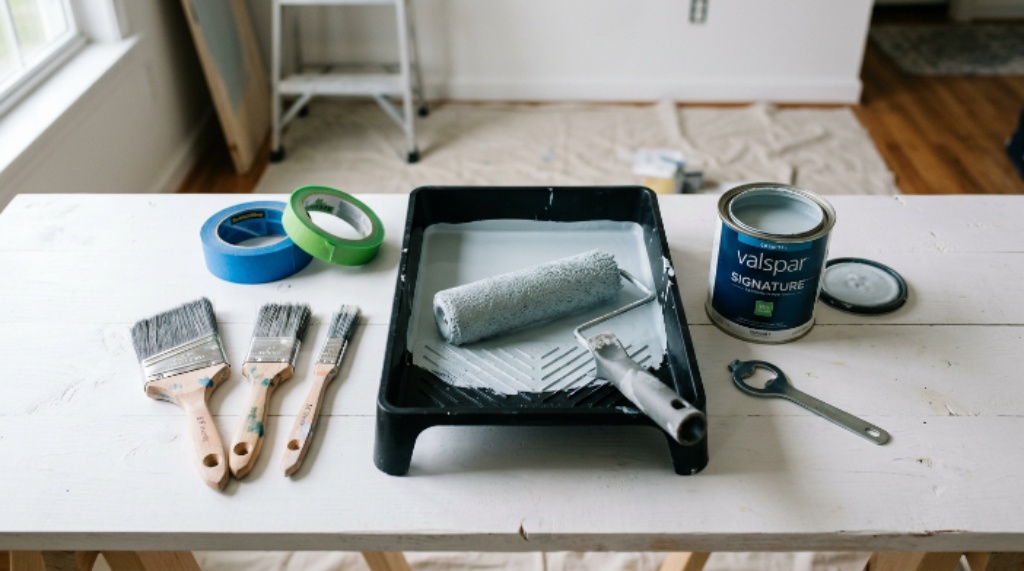
Brushes are your most personal tool. You will use them for cutting in along edges, corners, and trim. Look for brushes with flagged or split bristle tips. These hold more paint and release it smoothly. Synthetic bristles work well with water-based paints, while natural bristle brushes suit oil-based paints better.
You do not need a large set. A 2-inch angled brush and a 3-inch flat brush will cover most projects. Therefore, focus your budget on two quality brushes rather than a ten-piece set of poor ones.
Paint Rollers and Covers
Rollers cover large areas quickly and evenly. The roller frame should feel sturdy and comfortable in your hand. However, the cover is what really matters. Choose a nap thickness based on your surface. Smooth walls need a short nap of around 3/8 inch. Textured surfaces require a thicker nap of 1/2 inch or more.
Additionally, avoid the cheapest roller covers. They shed fibers onto your wall, which is frustrating to fix. A mid-range cover in the $5 to $10 range will perform reliably without breaking your budget.
Painter’s Tape
Tape protects surfaces you do not want to paint. It is one area where cutting corners truly costs you. Cheap tape often allows paint to bleed underneath, leaving uneven lines. A trusted brand of painter’s tape is worth the small extra cost. It removes cleanly and leaves crisp edges.
Drop Cloths and Trays
Drop cloths protect your floors and furniture. Canvas drop cloths are reusable and absorb spills rather than spreading them. Paint trays and liners are inexpensive and help you load your roller evenly. These items are simple but essential to any project.
Where to Find Quality Tools at Lower Prices
Knowing where to shop is just as important as knowing what to buy. The same brand of brush can vary widely in price depending on the retailer. Therefore, a little research before you buy can save you a meaningful amount of money.
Hardware Store Sales and Clearance Sections
Large hardware stores like Home Depot and Lowe’s regularly discount painting supplies, especially at the end of a season. Visit the clearance aisle often. You will find name-brand rollers, brushes, and even sprayers at significantly reduced prices. Additionally, stores often bundle tools into starter kits that offer better value than buying items separately.
Online Retailers and Marketplaces
Online shopping opens up a much wider range of options. Platforms like Amazon carry an enormous variety of DIY painting tools at competitive prices. Read reviews from verified buyers who completed similar projects. This feedback is more useful than any product description. Additionally, look for sellers who offer free returns, so you are not stuck with something that does not work.
Dollar Stores and Discount Retailers
Dollar stores can be a smart source for certain items. Drop cloths, stir sticks, and basic trays are often available at very low prices and perform just as well as more expensive versions. However, avoid buying brushes or rollers from these stores. The quality is typically too low for anything but the most basic touch-up work.
Secondhand and Thrift Stores
Thrift stores and online secondhand platforms sometimes carry used painting tools in good condition. Roller frames, extension poles, and paint sprayers can often be found for a fraction of their original price. Wash and inspect any used items carefully before using them on a project.

How to Evaluate Quality Without Paying Premium Prices
Not every affordable tool is a good deal. Learning to spot quality helps you avoid wasting money on products that fail after one use. Here are the most important things to check:
- Check the bristles on a brush. Tug them gently. If many fall out, the brush will shed during use and ruin your paint job.
- Feel the weight of the roller frame. A sturdy frame holds the cover securely and gives you better control.
- Roll a roller cover across your palm. If it sheds fibers immediately, avoid it. Good covers stay intact under light friction.
- Read the product label for material details. Avoid vague descriptions that do not specify bristle type or nap thickness.
- Look at the handle material. Wooden or rubber handles provide better grip than cheap plastic ones, especially during longer jobs.
Additionally, price is not always a reliable indicator of quality. Therefore, use these physical checks and customer reviews together to make an informed decision.
Smart Strategies to Stretch Your Painting Budget Further
Even with affordable tools, there are additional strategies you can use to reduce costs and improve results at the same time.
Clean and Reuse Your Tools
Cleaning your brushes and rollers after every use is the single best way to extend their life. Rinse water-based paint out with warm soapy water immediately after finishing. For oil-based paint, use the appropriate solvent. A well-cleaned brush can last for years and deliver consistently good results.
Use Roller Liners to Save Time and Paint
Plastic tray liners fit inside your paint tray and make cleanup much faster. They also reduce paint waste by allowing you to seal and store leftover paint in the tray between coats. This simple trick can save both time and money on larger projects.
Buy Multi-Purpose Tools When Possible
Some tools serve multiple purposes. An extension pole can attach to a roller for walls and ceilings alike. A good quality angled brush can handle both cutting in and detail work. Choosing versatile tools means buying fewer items overall. Therefore, look for products that describe multiple uses on the label.
Buy in Bulk for Larger Projects
If you are painting an entire home or multiple rooms, buying roller covers in multipacks reduces the per-unit cost significantly. The same logic applies to painter’s tape and drop cloths. Bulk purchasing is one of the most effective ways to keep your total spending low without compromising on what you use.
Common Mistakes That Cost You More in the Long Run
Trying to save money is smart. However, some common mistakes end up costing more than they save. Being aware of them helps you avoid unnecessary expenses.
Buying the absolute cheapest brushes is a frequent error. These tools leave marks, shed bristles, and wear out quickly. You end up buying replacements sooner than expected. A slightly higher-quality brush lasts longer and gives better results from the start.
Skipping primer to save money is another costly shortcut. Primer seals the surface and helps paint adhere. Without it, you may need extra coats of paint to get solid coverage. This uses more paint and more time, which eliminates any savings.
Not preparing the surface properly also leads to poor results. Dirt, grease, and old flaking paint prevent new paint from bonding. Therefore, always clean and sand surfaces before you begin. The tools for preparation are inexpensive, and the difference they make is significant.
Conclusion
Finding affordable painting tools that deliver professional results is absolutely achievable. The key is to focus on quality over quantity, shop in the right places, and care for your tools so they last.
Start with the essentials: a couple of good brushes, a sturdy roller setup, reliable tape, and basic protective supplies. Shop clearance sections, compare prices online, and read genuine customer reviews before buying. Additionally, clean your tools after every use to extend their lifespan and protect your investment.
With these strategies in place, you can confidently approach any painting project knowing that your tools are up to the task. Great results do not require a big budget. They require the right choices.
Frequently Asked Questions
1. What is the most important painting tool to invest in?
The paintbrush is arguably the most critical tool. A good-quality angled brush gives you clean lines and smooth coverage. It is worth spending a little more here than on any other single item in your kit. A quality brush also lasts for many projects when properly cleaned and stored.
2. Can I reuse roller covers?
Yes, you can reuse roller covers if you clean them thoroughly after each use. Rinse them under running water while squeezing out the paint until the water runs clear. Wrap them in plastic wrap to keep them fresh between coats on the same project. However, heavily used covers eventually lose their nap and should be replaced.
3. Is it worth buying a paint sprayer for home projects?
Paint sprayers can save a lot of time on large projects. However, they require practice to use correctly and need thorough cleaning after each use. For most homeowners painting interior walls, a roller and brush combination offers better control and easier cleanup. A sprayer becomes more valuable for fences, cabinets, and furniture.
4. How do I keep paint from drying on my brush mid-project?
If you are stepping away for less than an hour, wrap your brush tightly in plastic wrap. This prevents air from reaching the bristles and drying the paint. For longer breaks, rinse the brush partially and wrap it. Additionally, keep your paint can sealed when you are not actively using it to slow surface drying.
5. Are store-brand painting tools as good as name brands?
Store-brand tools vary widely in quality. Some hardware store house brands perform just as well as well-known names for basic tasks. However, always check reviews and physically inspect the product before buying. The best approach is to judge each item on its own merits rather than assuming store brands are always inferior. Many experienced painters rely on a mix of affordable DIY painting tools and a few trusted name-brand items.
Related Topics:
How to Decorate a One Bedroom Apartment for Affordable Living
