



Why Flat Roofs Fail Early in Miami, FL: Causes, Signs, and Prevention
Flat roofs often fail early in Miami, FL because intense rain, hurricane winds, heat, and poor drainage attack weak points repeatedly. Miami-Dade also sits within a High-Velocity Hurricane Zone, where some roof systems face severe wind demands. After storms, homeowners should address drainage problems quickly and learn how to fix ponding water on roof surfaces before moisture reaches the deck.
Key Takeaways
- Flat roofs usually fail through combined drainage, heat, moisture, and installation problems.
- Ponding water creates one of the most persistent threats to low-slope roof systems.
- Hurricane winds can expose weak seams, edges, flashings, and attachment points.
- Miami’s heat accelerates membrane aging and stresses roof materials through expansion.
- Regular inspections can identify small defects before they become structural problems.
- Professional repairs should follow Miami-Dade requirements and approved roofing assemblies.
1. Miami’s Climate Creates a Relentless Roof Stress Cycle
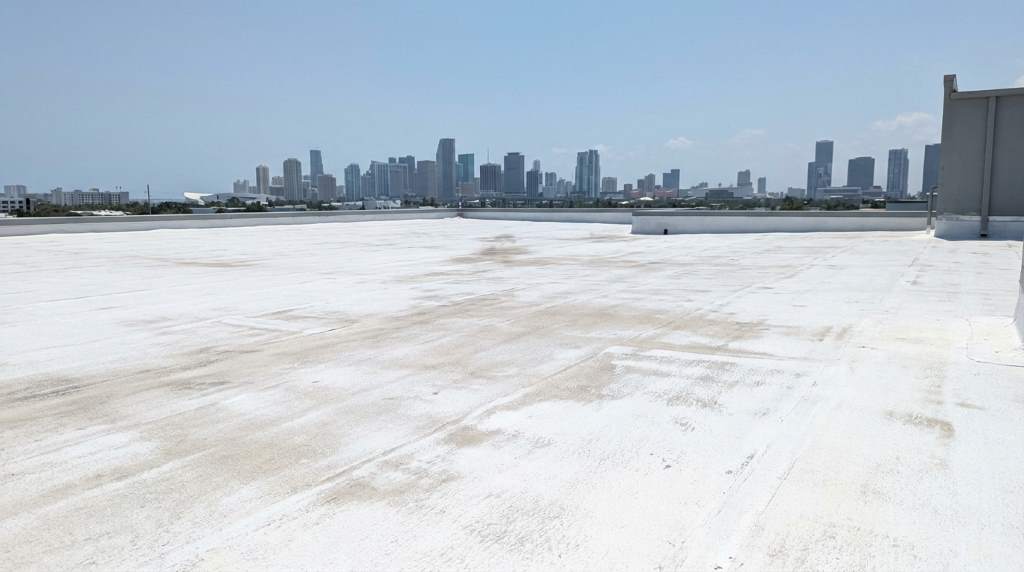
Miami gives flat roofs little opportunity to recover between damaging weather events. High temperatures, intense ultraviolet exposure, heavy rainfall, humidity, and tropical storms repeatedly stress the roof assembly.
Moreover, Miami-Dade’s hurricane scale identifies Category 1 winds at 74 to 95 mph. Stronger hurricanes can produce substantially greater roof damage, making proper design and attachment essential.
Flat roofs face an additional challenge because they depend on carefully controlled drainage. Unlike steep roofs, they cannot rely primarily on gravity to move every drop away.
Therefore, a small slope problem can become a major moisture problem. When drains, scuppers, or gutters perform poorly, water remains where the roof needs it least.
Why Miami Heat Matters
Roof membranes expand during intense daytime heating and contract as temperatures change. Consequently, repeated movement can stress seams, flashing transitions, adhesives, and older coatings.
Ultraviolet radiation also gradually weakens exposed roofing materials. Once the surface loses flexibility, small cracks can develop and allow water beneath the membrane.
2. Ponding Water Quietly Destroys Flat Roofs
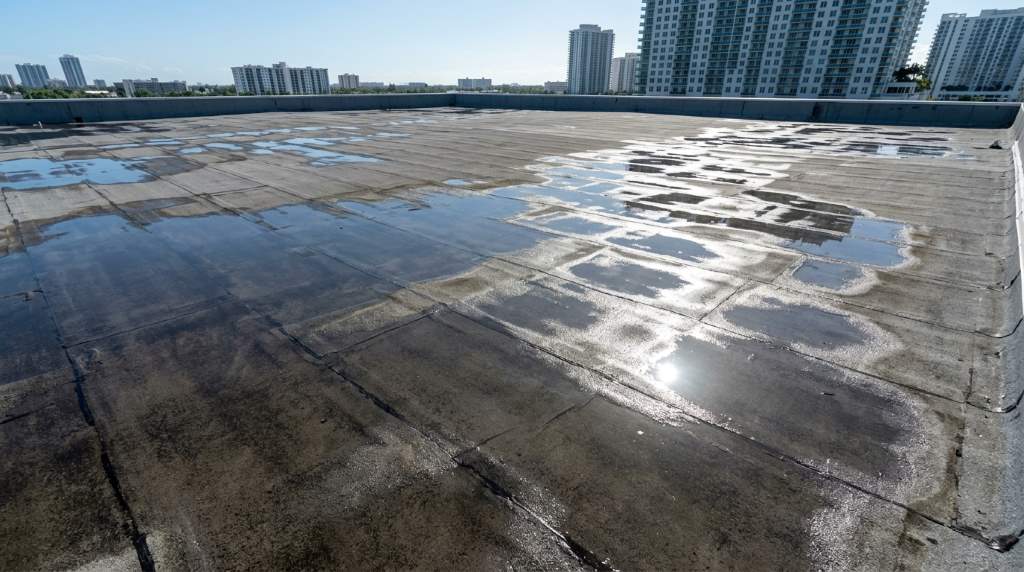
Ponding water means rainwater remains on the roof instead of draining within an appropriate period. This condition often signals inadequate slope, blocked drainage, membrane deformation, or structural deflection.
Furthermore, standing water adds weight and keeps roofing materials continuously wet. Over time, that combination can accelerate membrane deterioration and damage underlying insulation or decking.
Miami-Dade’s roofing requirements recognize drainage details as critical components of low-slope systems. Current permit documentation includes specific requirements for drains, scuppers, and overflow scuppers.
Homeowners should therefore inspect drainage points after major storms. Clearing debris, correcting damaged drains, and addressing low spots early can prevent much larger repairs.
Common Ponding Causes
- Blocked roof drains: Leaves, debris, and sediment restrict normal water movement.
- Insufficient slope: Poor design can leave sections without adequate drainage.
- Deck deflection: Structural movement can create permanent low areas.
- Compressed insulation: Wet or damaged insulation can change the roof’s drainage profile.
- Damaged drainage components: Cracked scuppers or deteriorated drains can redirect water.
If you notice recurring standing water, investigate the cause rather than repeatedly applying surface patches. A durable solution should restore drainage and address the underlying roof assembly.
3. Hurricane Winds Expose Weak Roof Attachments
Flat roofs experience substantial wind pressure, particularly around perimeter zones and corners. Consequently, weak fasteners, adhesives, edge details, and flashing can become failure points during severe storms.
Miami-Dade’s High-Velocity Hurricane Zone requires roofing systems to meet demanding testing and installation standards. The county also maintains product approval requirements for qualifying roofing assemblies.
During reroofing, contractors must consider more than the visible membrane. They may need to evaluate decking attachment, secondary water protection, roof-to-wall connections, and other components.
For example, Miami-Dade guidance addresses roof-deck attachment and secondary water barriers during qualifying roof replacements.
Older properties deserve particular attention because their original construction may not match current resilience expectations. A professional inspection can reveal attachment weaknesses before the next major storm.
Where Wind Damage Often Starts
- Roof edges: Perimeter zones experience concentrated wind pressure.
- Seams: Aging or poorly bonded seams can separate under repeated stress.
- Parapets: Damaged coping and flashing can create openings for wind-driven rain.
- Penetrations: Pipes, vents, and equipment require durable flashing details.
- Fasteners: Corrosion or inadequate attachment can compromise the assembly.
4. Poor Installation Can Shorten a Roof’s Life Dramatically
A quality membrane cannot compensate for poor workmanship beneath or around it. Incorrect fastener placement, weak seams, inadequate flashing, and unsuitable materials can create immediate vulnerabilities.
For broader roof-system context, homeowners can review gable roof rafter nailed details when comparing how different assemblies transfer structural forces.
Likewise, contractors must follow the roofing system’s approved installation specifications. Miami-Dade’s product-control system evaluates roofing assemblies for performance within the High-Velocity Hurricane Zone.
Installation quality also affects waterproofing around penetrations. Every pipe, vent, curb, drain, and transition creates another opportunity for water to enter.
Therefore, homeowners should choose contractors who understand local code requirements and can document the approved system. A low initial bid can become expensive when shortcuts reduce service life.
Installation Mistakes Worth Watching
- Loose or incorrectly spaced fasteners.
- Improperly welded or bonded membrane seams.
- Weak flashing around penetrations.
- Inadequate edge securement.
- Incorrect drainage details.
- Unapproved materials or incompatible roof components.
5. Humidity and Moisture Attack the Roof from Below
Miami’s humid environment creates persistent moisture challenges for roofing assemblies. Small leaks can therefore cause damage long before occupants notice interior staining.
Moisture can enter through seams, flashing defects, penetrations, cracks, or damaged coatings. Once trapped beneath a membrane, it can deteriorate insulation and weaken portions of the roof deck.
Ventilation also matters because trapped heat and moisture can worsen conditions within certain roof assemblies. Understanding box gable roof ventilation options can provide useful context when evaluating ventilation principles across roof designs.
However, ventilation alone cannot correct a leaking membrane. Contractors must identify the actual moisture pathway and repair the defective component.
Signs Moisture Has Moved Beyond the Surface
- Soft or spongy areas underfoot.
- Interior ceiling stains after rainfall.
- Musty odors near upper rooms.
- Bubbling or blistering membrane areas.
- Visible deterioration around roof penetrations.
Never ignore recurring interior stains simply because they disappear after dry weather. Intermittent leaks often indicate a roof defect that activates during specific rainfall conditions.
6. Aging Materials Lose Their Ability to Absorb Stress
Every roofing material has a service life, but Miami’s environment can accelerate deterioration. Heat, ultraviolet radiation, salt-laden coastal air, rain, and storm exposure repeatedly challenge exposed surfaces.
As materials age, membranes may become brittle, coatings may lose elasticity, and flashing may crack. Consequently, defects that once remained harmless can begin admitting water.
Modern roofing technology can improve resilience when contractors select compatible systems and install them correctly. Homeowners can also explore new roofing technology trends when planning a replacement.
Still, newer technology does not automatically guarantee longer performance. Proper design, approved materials, skilled installation, drainage, maintenance, and inspections must work together.
7. Neglected Maintenance Turns Small Defects Into Major Failures
Most serious flat-roof failures begin with relatively manageable defects. Unfortunately, owners often postpone repairs until leaks become visible inside the building.
Routine inspections provide an opportunity to identify membrane damage, clogged drains, deteriorated flashing, and ponding. Afterward, contractors can address localized problems before they spread.
A practical maintenance routine should include several checkpoints:
- Inspect drains and scuppers after heavy rainfall.
- Check seams and flashing for visible separation.
- Remove leaves and debris without damaging the membrane.
- Look for new cracks, blisters, bubbles, or soft areas.
- Inspect roof penetrations and equipment curbs.
- Document recurring ponding locations with photographs.
Schedule a professional assessment when defects appear repeatedly or after a major storm. Prompt evaluation can distinguish cosmetic deterioration from deeper structural concerns.
8. How to Prevent Early Flat Roof Failure in Miami
The strongest prevention strategy combines correct design, professional installation, drainage control, inspections, and timely repairs. Each element protects the others from becoming a single point of failure.
First, verify that the roofing system suits Miami’s wind environment and complies with applicable requirements. Next, confirm that the contractor follows the manufacturer’s approved installation details.
Then, establish a maintenance schedule based on the roof’s age, material, exposure, and condition. Inspect more frequently when the property experiences repeated storms or recurring drainage problems.
Finally, keep detailed records of inspections and repairs. These records help contractors identify recurring problems and help owners make better replacement decisions.
When Replacement Makes More Sense
Repair makes sense when damage remains localized and the underlying assembly remains structurally sound. Replacement becomes more practical when deterioration covers large areas or defects repeatedly return.
Similarly, widespread moisture intrusion can make repeated patching uneconomical. A roofing professional should evaluate the membrane, insulation, decking, drainage, and attachment system before recommending replacement.
9. Why Local Roofing Expertise Matters in Miami
Miami roofing requires more than general roofing knowledge because local weather and code requirements create specialized demands. Contractors must understand wind uplift, water intrusion, approved assemblies, and storm-related risks.
Miami-Dade specifically requires roofing work within the HVHZ to follow applicable Florida Building Code requirements and testing protocols.
That local expertise becomes especially important when replacing older roofs. The contractor should identify hidden deck damage and verify that the proposed system suits the property’s conditions.
Therefore, ask prospective contractors about licensing, permits, product approvals, warranties, drainage design, and hurricane-resistant installation. Clear answers can reveal whether a contractor understands the roof beyond its visible surface.
Conclusion: Stop Flat Roof Problems Before They Become Structural
Flat roofs fail early in Miami mainly because water, heat, humidity, hurricanes, aging materials, and installation weaknesses reinforce one another. The most effective defense combines proper drainage, approved materials, skilled installation, and consistent maintenance.
If your roof develops recurring ponding, leaks, membrane damage, or storm-related defects, arrange a professional inspection promptly. Addressing the underlying cause now can protect the roof deck, reduce repair costs, and extend the roof’s useful life.
Frequently Asked Questions
Why do flat roofs fail faster in Miami?
Miami’s heat, humidity, heavy rainfall, ultraviolet exposure, and hurricane winds place repeated stress on flat roofing systems.
How long should a flat roof last in Miami?
Service life varies by material, installation quality, maintenance, exposure, and drainage performance, so no single lifespan applies universally.
Is ponding water normal on a flat roof?
Persistent ponding indicates a drainage or structural problem and should receive professional evaluation rather than routine patching.
Can hurricanes damage a flat roof?
Yes, hurricane winds can damage membranes, seams, flashings, edges, fasteners, and other roof components when weaknesses exist.
When should I replace my Miami flat roof?
Consider replacement when widespread deterioration, recurring leaks, extensive moisture damage, or repeated repairs make continued maintenance uneconomical.
