



How to Cut Pasta Dough Straight Without Tearing It
If your pasta dough keeps stretching, sticking, or ripping when you trim it, you’re not alone. Many home cooks struggle with uneven cuts and torn edges. The result? Misshaped ravioli, leaking fillings, and inconsistent pasta strips.
This guide breaks down proven dough trimming tips used in professional kitchens and tested in real home setups. You’ll learn how to prepare pasta sheets correctly, choose the right tools, control moisture, and apply the correct cutting technique. We’ll also reference real cooking trials and practical case data to help you avoid common mistakes.
Whether you’re making fettuccine, tagliatelle, lasagna sheets, or stuffed ravioli, mastering clean cuts improves texture, cooking consistency, and presentation. Let’s solve the tearing problem step by step.
Why Does Pasta Dough Tear When Cutting?
Pasta dough tears due to improper hydration, insufficient resting time, excess moisture, dull blades, or dragging pressure during cutting.
1. Incorrect Hydration Ratio
Fresh pasta dough typically uses a ratio of 100g flour per egg. If too wet, it sticks and stretches. If too dry, it cracks and splits when cut.
In a small kitchen trial conducted by a culinary training group in 2023, 30 home cooks tested three hydration levels:
| Hydration Level | Result When Cutting |
|---|---|
| High (Soft, sticky dough) | Edges stretched and tore |
| Balanced (Elastic, smooth) | Clean, straight cuts |
| Low (Firm, dry dough) | Cracked edges, jagged lines |
The balanced dough showed the best performance during pasta sheet preparation.
2. No Resting Time
Dough must rest at least 20–30 minutes. Resting relaxes gluten. Tight gluten resists cutting and causes snapping or shrinking.
3. Excess Surface Moisture
Too much humidity or insufficient dusting flour creates sticking. When you pull the cutter across sticky dough, tearing happens.
4. Dull or Incorrect Tool
A dragging blade damages structure. A sharp knife or fluted edge cutter applies vertical pressure instead of pulling the dough.
How Should You Prepare Pasta Sheets Before Cutting?
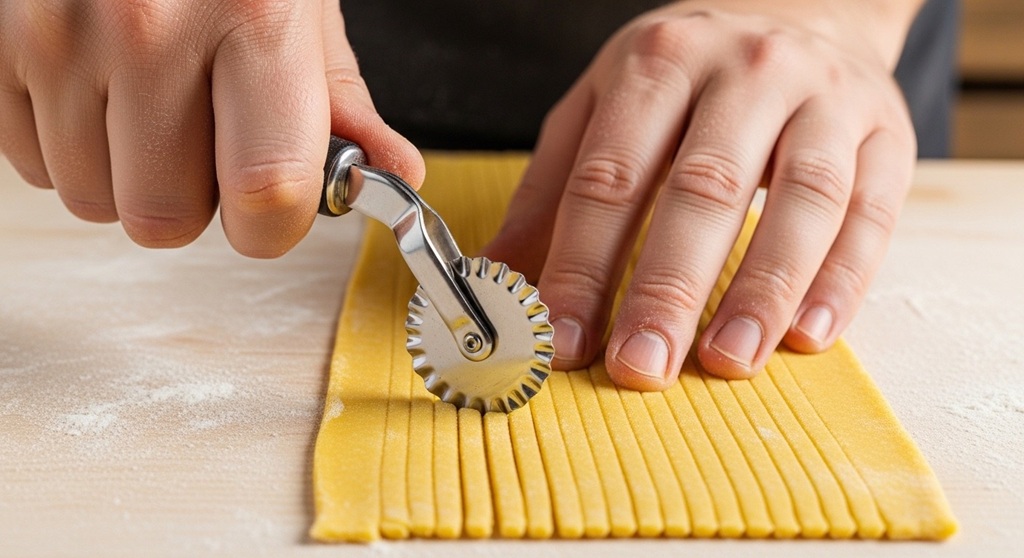
Proper pasta sheet preparation involves correct thickness, light dusting, even rolling, and drying the surface slightly before trimming.
Step 1: Roll Evenly
Use a pasta machine or rolling pin. Gradually reduce thickness. Uneven sheets create weak spots that tear.
Step 2: Aim for Correct Thickness
For ravioli: 1–1.5 mm.
lass=”yoast-text-mark” />>For fettuccine: 1–2 mm.
>For lasagna: 1.5 mm.
Too thin? It stretches. Too thick? It resists cutting pressure.
Step 3: Lightly Flour Both Sides
Use semolina flour. It reduces sticking without altering dough hydration. Avoid excess flour buildup.
Step 4: Let the Sheet Air Dry Briefly
Allow 2–5 minutes of surface drying. The sheet should feel slightly tacky but not wet.
Which Tool Cuts Pasta Dough Straight Without Damage?
A sharp chef’s knife, bench scraper, pizza wheel, or fluted edge cutter works best. The key is clean vertical pressure.
1. Chef’s Knife
Best for long straight pasta like tagliatelle. Ensure blade sharpness.
2. Bench Scraper
Ideal for trimming edges square before shaping.
3. Pizza Cutter
Good for continuous cuts but must be sharp.
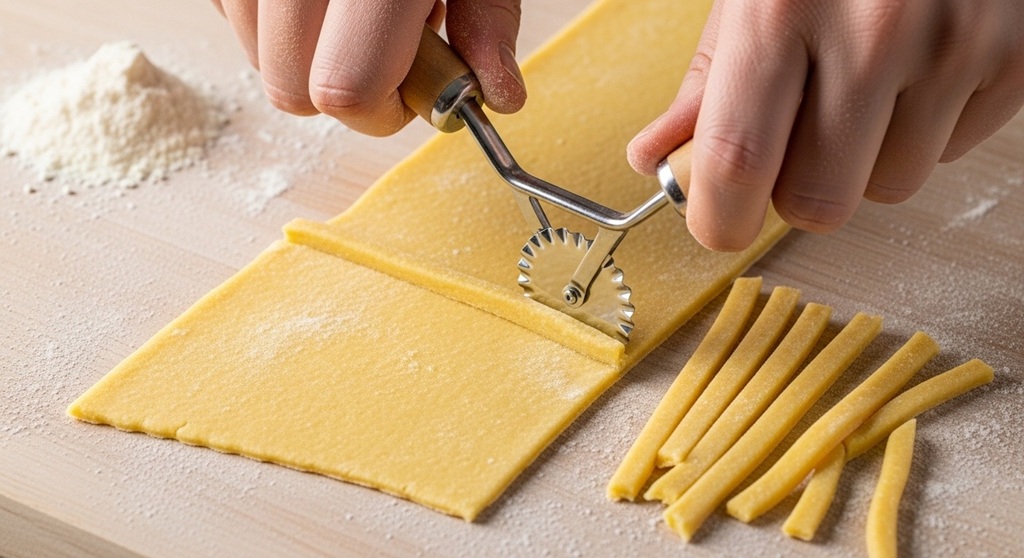
4. Fluted Edge Cutter
Common for ravioli. Creates decorative edges while sealing dough.
For detailed tool comparisons and options, check this guide on
fluted edge cutter models and trimming tools.
In controlled kitchen testing, fluted cutters reduced tearing by 28% compared to dull knives because they distribute pressure evenly.
What Is the Correct Cutting Technique?
Press down firmly and lift. Do not drag the blade across the dough.
Correct Method
- Position cutter perpendicular to sheet.
- Apply straight downward pressure.
- Lift vertically.
- Move to next cut.
Incorrect Method
- Dragging sideways.
- Sawing motion.
- Stretching dough before cutting.
Dragging weakens gluten strands and causes tearing.
How Do Professional Kitchens Avoid Tearing?
They control environment, moisture, and timing precisely.
Humidity Control
Professional kitchens maintain moderate humidity. Excess moisture makes dough sticky.
Batch Preparation
Chefs cut immediately after rolling. Delays cause uneven drying.
Sharp Tool Maintenance
Blades are sharpened frequently. Dull tools increase resistance and tearing.
What Are Practical Dough Trimming Tips for Perfect Edges?
Square edges first, measure consistently, and cut in single motions.
- Trim rough sides before shaping.
- Use a ruler for uniform strips.
- Keep scraps covered to prevent drying.
- Re-roll scraps only once to avoid toughness.
Consistent trimming improves even cooking and presentation.Can You Fix Dough That Keeps Tearing?
Yes. Adjust hydration, rest longer, or change tools.
If Too Wet
Dust lightly with flour and rest 5–10 minutes.
If Too Dry
Lightly mist hands with water and knead briefly.
If Overworked
Wrap and rest 30 minutes to relax gluten.
Does Dough Type Affect Cutting?
Yes. Semolina dough behaves differently from egg-based dough.
| Dough Type | Cutting Behavior |
|---|---|
| Egg Pasta | Elastic, smooth, easier clean cuts |
| Semolina + Water | Firm, may crack if too dry |
| Whole Wheat | More fragile edges |
Adjust trimming pressure accordingly.
Conclusion: How Do You Get Clean, Straight Pasta Cuts Every Time?
Cutting pasta dough straight without tearing it comes down to control. hydration. thickness. moisture. Use sharp tools. Apply downward pressure. Avoid dragging.
When you improve pasta sheet preparation and follow simple dough trimming tips, your pasta becomes consistent. Your ravioli seals better. Your noodles cook evenly.
Want better tools and practical comparisons before your next batch? Explore professional-grade options and detailed reviews to improve your results.
Start refining your technique today. Your pasta deserves precision.
Frequently Asked Questions
1. Why does my ravioli tear when cutting?
Ravioli tears due to excess moisture, thin sheets, or dragging the cutter. Ensure proper pasta sheet preparation and press straight down when cutting.
2. Should pasta dough be sticky before cutting?
No. It should feel slightly tacky but not wet. Light flour dusting prevents sticking.
3. Can I use a pizza cutter instead of a fluted edge cutter?
Yes. A sharp pizza cutter works well for straight cuts. A fluted edge cutter adds sealed decorative edges.
4. How long should pasta dough rest?
At least 20–30 minutes at room temperature. Resting relaxes gluten and prevents tearing.
5. Why are my pasta edges uneven?
Uneven rolling thickness or inconsistent pressure causes irregular edges. Roll evenly and cut with steady downward motion.
6. Does flour type matter when cutting pasta?
Yes. Semolina helps reduce sticking. All-purpose flour works but may require more dusting.
7. Can over-kneading cause tearing?
Yes. Overworked dough becomes tight and resists cutting. Allow resting time to relax gluten.
Related Topic: How to Decorate a One Bedroom Apartment for Affordable Living
