



Why Is Fish Tank Water Cloudy in Miami, FL?
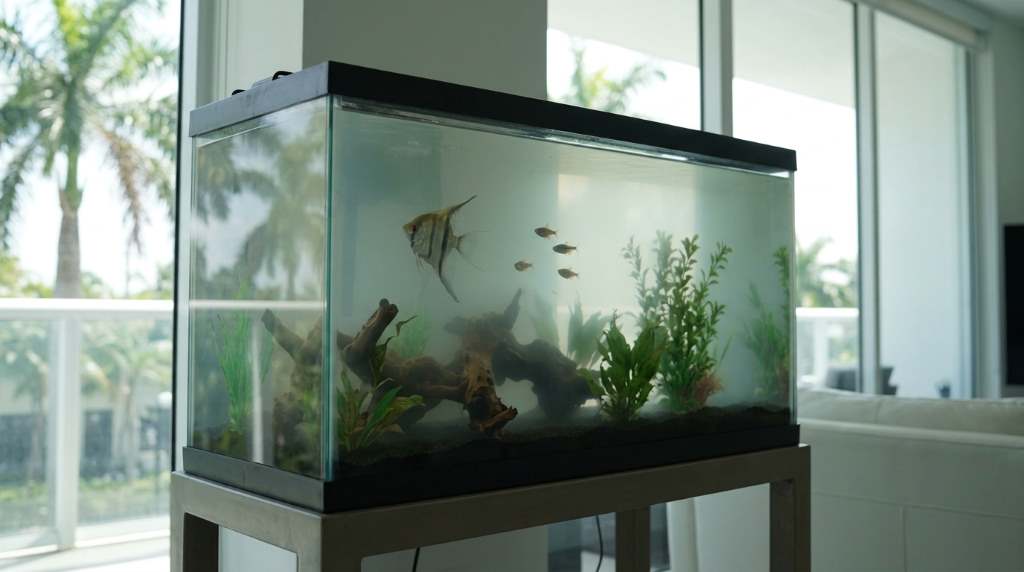
Fish tank water in Miami, FL, usually turns cloudy because of bacterial blooms, excess waste, poor filtration, or unstable water chemistry. New tanks can take several weeks to cycle, while larger systems may need months to stabilize. Also, fish should receive only enough food for roughly two minutes of eating. If surface buildup appears alongside cloudy water, remove aquarium surface scum before diagnosing deeper water-quality problems.
What Cloudy Aquarium Water Usually Means
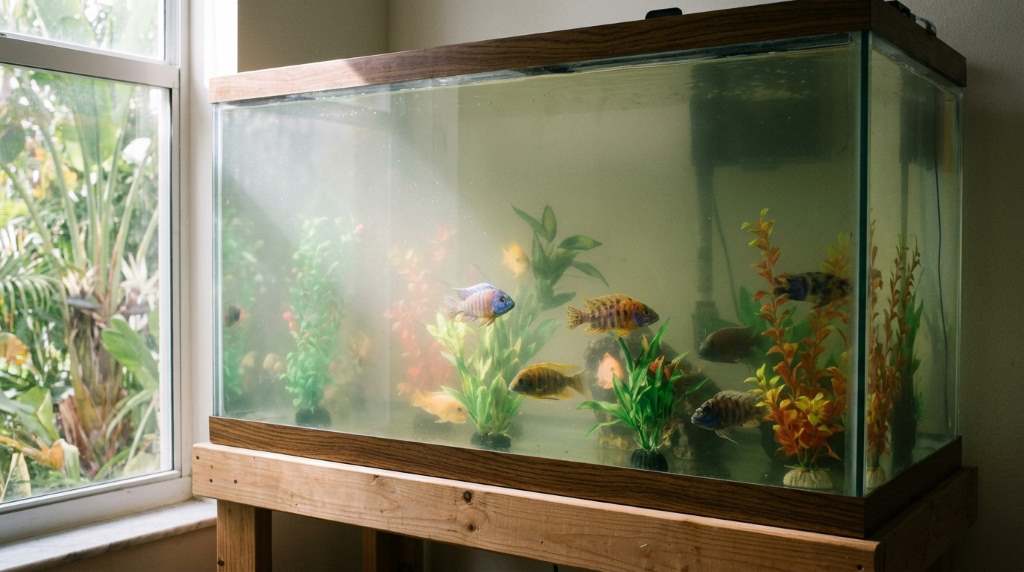
Cloudiness does not always mean your fish tank has become unsafe. However, sudden changes deserve attention because different colors often indicate different underlying causes.
White or gray water commonly points toward suspended bacteria or disturbed particles. Meanwhile, green water usually signals excessive algae growth caused by light and available nutrients.
Yellow or brown water can develop when driftwood releases tannins or organic material accumulates. Therefore, identifying the appearance first can prevent unnecessary cleaning and chemical treatments.
In Miami, local tap-water practices can also influence aquarium preparation. Miami-Dade normally uses combined chlorine, or chloramine, during drinking-water treatment.
That disinfectant protects drinking water but requires proper aquarium conditioning before entering your tank. Never assume clear tap water automatically makes safe aquarium water.
Why Miami Tap Water Can Affect Aquarium Clarity
Miami tap water itself does not automatically cause cloudy aquarium water. However, untreated or improperly conditioned replacement water can disrupt an established biological system.
Miami-Dade periodically changes its disinfection method during its annual chlorine conversion. The 2026 conversion is scheduled for September 28 through October 11.
During that period, the county temporarily uses free chlorine instead of its standard combined chlorine treatment. Aquarium owners should therefore pay closer attention to water conditioning during replacement water changes.
For broader preparation guidance, review how to water air plants only when caring for plants separately. Aquarium plants still require aquarium-safe water and appropriate aquatic conditions.
Most importantly, use a conditioner designed to neutralize the disinfectant present in your local water supply. Then, match temperature and other important parameters before adding replacement water.
Why Water Changes Sometimes Make Cloudiness Worse
A large water change can temporarily improve appearance while disturbing the tank’s biological balance. Consequently, the cloudy water may return within a short period.
This effect becomes especially noticeable when the aquarium already has an unstable nitrogen cycle. Sudden changes can shift available nutrients and bacterial populations throughout the system.
Instead of repeatedly replacing nearly all the water, focus on identifying the source. Then, make measured partial changes when testing indicates they are necessary.
Six Common Causes of Cloudy Fish Tank Water
Most cloudy-water problems trace back to a manageable imbalance rather than a mysterious aquarium failure. Start with these six causes before buying corrective chemicals.
1. A New Tank Is Still Cycling
New aquariums frequently become milky because beneficial bacteria have not established stable populations. Free-floating bacteria can multiply rapidly when nutrients become available.
This bacterial bloom often appears during the early cycling period. Therefore, patience can work better than aggressive cleaning when ammonia and nitrite remain controlled.
A newly established aquarium should receive careful monitoring rather than constant disruption. Test ammonia and nitrite regularly while stocking fish gradually.
2. You Are Overfeeding the Fish
Uneaten food decomposes and supplies nutrients that fuel bacterial growth. Additionally, excessive feeding increases organic waste and can raise ammonia levels.
Feed small portions that fish finish quickly instead of dropping large amounts into the aquarium. Remove obvious leftovers when fish cannot consume them.
Reducing food often improves cloudy water without requiring expensive equipment. However, continue testing because visible clarity does not guarantee safe chemistry.
3. The Aquarium Contains Too Many Fish
Every fish adds biological waste that the filtration system must process. Overstocking can therefore overwhelm both mechanical and biological filtration.
Check your actual fish population against the aquarium’s usable water volume. Consider adult fish size rather than the smaller size seen at purchase.
If stocking exceeds the system’s capacity, reducing the population provides a more durable solution. Adding another filter alone may not correct an overloaded aquarium.
4. Your Filter Cannot Handle the Waste Load
Cloudy water can appear when filtration fails to capture suspended particles or process biological waste. Clogged media, weak flow, and undersized filters commonly contribute.
Check whether water moves consistently through the filter. Also inspect the intake, impeller, sponge, and mechanical media for accumulated debris.
Clean reusable media using removed aquarium water rather than untreated tap water. This approach helps preserve beneficial bacteria living inside established biological media.
5. Excess Light Is Feeding Algae
Green or greenish water usually indicates suspended algae rather than a bacterial bloom. Excessive lighting provides algae with energy while nutrients remain available.
Reduce unnecessary lighting and avoid placing the aquarium beside strong direct sunlight. Keep a consistent lighting schedule that matches your fish and plants.
Do not respond by repeatedly scrubbing every surface. Instead, control light, nutrients, and maintenance habits that allow algae to return.
6. Something Is Decaying Inside the Tank
A dead fish, rotting plant, trapped food, or decomposing organic material can rapidly cloud aquarium water. These materials release nutrients that encourage bacterial multiplication.
Inspect behind decorations, beneath substrate, and around filter intakes. Remove decaying material promptly while avoiding unnecessary disturbance to healthy biological media.
After removal, test ammonia and nitrite to determine whether the decay affected water chemistry. Fish showing stress require faster intervention.
How to Diagnose Cloudy Water Before Fixing It
Start by observing the water under normal aquarium lighting. Then, record its color, smell, clarity, and the recent maintenance changes.
Next, test ammonia, nitrite, nitrate, pH, and other relevant parameters. These results provide more useful information than appearance alone.
For example, clear water can still contain dangerous ammonia or nitrite. Conversely, milky water can sometimes occur during harmless bacterial population changes.
Use a simple diagnostic sequence to narrow the problem:
- Milky white: Check for bacterial blooms, overfeeding, new-tank cycling, or decaying material.
- Green: Reduce excessive light and investigate nitrate or phosphate accumulation.
- Yellow or brown: Inspect driftwood, organic debris, and dissolved tannins.
- Gray with debris: Inspect mechanical filtration and recently disturbed substrate.
- Cloudy after maintenance: Review cleaning methods and recent water additions.
If the aquarium suddenly becomes hazy after a water change, review the source water first. The Miami-Dade water system publishes annual quality information for residents.
What to Do When Fish Tank Water Turns Cloudy
First, avoid panic and resist the temptation to completely dismantle the aquarium. Instead, identify whether the tank is new, established, overfed, or overloaded.
Then, test ammonia and nitrite immediately if fish appear stressed. Both should remain at zero in a properly established freshwater aquarium.
If readings remain safe, reduce feeding temporarily and allow the biological system to stabilize. Continue normal filtration rather than switching the filter off.
When mechanical filtration becomes dirty, clean only the appropriate media. Preserve established biological media because beneficial bacteria support the nitrogen cycle.
For established tanks, perform sensible partial water changes when testing or visible waste supports them. Avoid repeatedly replacing the entire aquarium volume.
If your tank water remains hazy despite normal maintenance, compare your symptoms with tank water hazy Miami FL troubleshooting guidance. This comparison can help separate local water concerns from aquarium-specific problems.
When You Should Not Add Clarifying Chemicals
Water clarifiers can make suspended particles clump together for easier filtration. However, they do not solve overfeeding, overstocking, or cycling problems.
Therefore, treat clarifiers as optional tools rather than primary solutions. Fix the underlying cause before relying on additives for visual improvement.
Likewise, avoid repeatedly adding bottled bacteria without understanding your aquarium’s biological condition. More products cannot compensate for poor stocking or excessive waste.
How Filtration and Aeration Help Keep Water Clear
Effective filtration performs several jobs simultaneously, including particle removal and biological waste processing. Adequate circulation also distributes oxygen throughout the aquarium.
However, stronger water movement does not automatically mean better filtration. Fish species, tank size, plants, substrate, and filter design all influence appropriate circulation.
An air pump can support gas exchange, especially when surface movement remains weak. Still, aeration cannot replace proper mechanical and biological filtration.
When upgrading equipment, learn find energy efficient aquarium air pump options before choosing a model. Select equipment based on actual aquarium requirements rather than wattage alone.
Signs Your Filter Needs Attention
Watch for weaker flow, unusual noises, clogged intake screens, or rapidly dirty mechanical media. These symptoms can indicate restricted filtration capacity.
Also inspect whether water bypasses the filter media. Poorly seated cartridges or damaged seals can allow particles to circulate without adequate filtration.
Maintain the filter consistently instead of waiting until performance collapses. Preventive cleaning usually creates fewer biological disruptions than emergency maintenance.
Miami-Specific Aquarium Maintenance Practices
Miami’s warm climate can make aquarium temperature management particularly important. Warmer water generally holds less dissolved oxygen than cooler water.
Therefore, maintain stable temperature rather than allowing large daily fluctuations. Use a reliable aquarium thermometer and check it regularly.
Local water-treatment changes also deserve attention when replacing aquarium water. Miami-Dade specifically advises tropical-fish owners to seek aquarium maintenance guidance during chlorine-conversion periods.
Always condition replacement water before adding it to your aquarium. Never depend on letting tap water sit briefly as a universal solution.
Additionally, avoid placing tanks where intense sunlight enters through windows. Florida’s bright outdoor conditions can contribute to excessive algae when light reaches aquarium glass.
A Simple Weekly Routine for Clearer Aquarium Water
Clear water usually comes from consistent habits rather than occasional intensive cleaning. Build a short maintenance routine that matches your aquarium’s biological load.
Use this weekly checklist:
- Inspect: Check fish behavior, water appearance, filter flow, and equipment condition.
- Test: Measure ammonia, nitrite, nitrate, and other relevant parameters.
- Clean: Remove visible debris, dead leaves, and uneaten food.
- Maintain: Clean clogged mechanical media without destroying biological media.
- Review: Adjust feeding if excessive leftovers appear after meals.
- Observe: Watch for recurring cloudiness after maintenance or water changes.
Keep a simple maintenance log if cloudiness repeatedly returns. Recording feeding, water changes, test results, and filter cleaning can reveal patterns quickly.
When Cloudy Water Becomes an Emergency
Cloudy water requires urgent attention when fish gasp, hide continuously, lose balance, or breathe rapidly. Those symptoms can indicate serious water-quality stress.
Test ammonia and nitrite immediately when fish show unusual behavior. Then, respond according to your test results and the aquarium’s established maintenance practices.
Also investigate sudden cloudiness after equipment failure, chemical contamination, or accidental overdose. These situations require faster action than ordinary bacterial blooms.
If fish appear severely distressed, prioritize water quality and professional aquarium assistance. Do not wait for water clarity to improve before addressing obvious symptoms.
How to Prevent Cloudy Aquarium Water Long Term
Prevention starts with appropriate stocking, restrained feeding, reliable filtration, and consistent testing. These four habits address most recurring cloudiness problems.
Choose fish according to the mature aquarium environment rather than impulse purchases. Quarantine new fish when practical to reduce biological and disease-related risks.
Keep decorations and substrate clean without aggressively sterilizing the entire aquarium. A healthy tank needs beneficial microorganisms throughout its biological system.
Finally, treat every water change as a chemistry event rather than simple housekeeping. Condition the water, match temperature, and avoid unnecessary parameter swings.
Conclusion
Fish tank water becomes cloudy in Miami mainly because of bacterial blooms, excess nutrients, algae, poor filtration, or unstable maintenance. Local tap-water treatment can also matter when replacement water enters an aquarium without proper conditioning.
Start by identifying the cloudiness type, then test ammonia and nitrite before making major changes. Reduce excess food, inspect filtration, control light, and remove decaying material when necessary.
Most importantly, build consistent maintenance habits instead of chasing crystal-clear water with repeated chemical treatments. If cloudy water persists or fish show distress, test promptly and seek qualified aquarium assistance.
Frequently Asked Questions
Why is my fish tank water cloudy after a water change?
Cloudiness after a water change can result from bacterial disruption, suspended debris, untreated water, or disturbed substrate.
Is cloudy aquarium water dangerous for fish?
Cloudy water is not always dangerous, but associated ammonia or nitrite increases can seriously threaten fish.
Can Miami tap water make aquarium water cloudy?
Miami tap water can contribute indirectly when disinfectants or chemistry changes are not properly managed during water replacement.
How long does cloudy water take to clear?
A mild bacterial bloom can clear naturally after the aquarium stabilizes, although persistent cloudiness requires diagnosis.
Should I change all the water when my tank turns cloudy?
No, complete water changes can disrupt beneficial bacteria, so targeted partial changes usually provide a better approach.
