





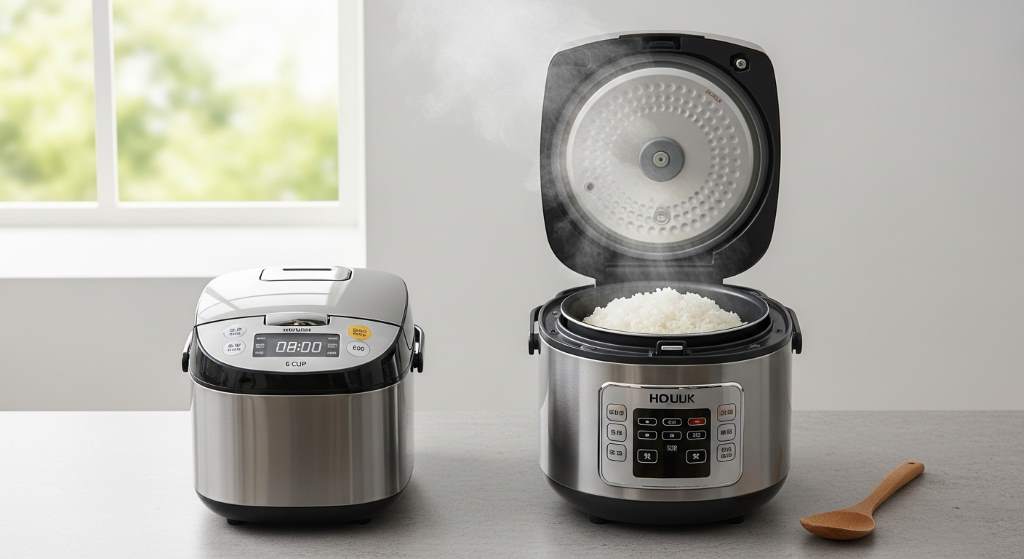
6-Cup vs. Larger Rice Cookers: Pros, Cons, and the Perfect Pick for Your Home
Imagine the aroma of steaming jasmine rice filling your kitchen after a long day. You flip the switch, and dinner sorts itself out. Rice cookers make this magic happen every time. They simmer grains to perfection without constant watching. Yet, picking the right size changes everything. A 6-cup model suits quick meals for one or two. Larger ones handle family feasts with ease. In the US, rice use has climbed to 5.2 million metric tons by 2024/25, nearly double from decades ago. Globally, rice feeds over half the world’s population as a staple. For small setups, try the ERC003B Versatile Cooker. This guide breaks down 6-cup versus bigger options. You’ll spot pros, cons, and tips to match your life. Let’s dive in and cook smarter.
Understanding Rice Cooker Capacities
Rice cookers come in various sizes. Manufacturers measure them by uncooked rice cups. Each cup equals about 180ml. Cooked, that swells to three times the volume. So, a 6-cup cooker yields 18 cups of fluffy grains. Larger models push past 30 cups cooked.
Why does size matter? It ties to your household rhythm. Singles grab compact units. Families lean toward roomy ones. Moreover, capacity affects cooking speed and power draw. Smaller pots heat faster. Bigger bowls simmer evenly for crowds.
Consider your routine first. Do you batch prep on Sundays? Or cook fresh nightly? These questions guide your choice. Next, we’ll unpack each size in detail.
What Defines a 6-Cup Rice Cooker?
A 6-cup rice cooker shines for modest needs. It holds up to 6 uncooked cups. That translates to 12 servings of cooked rice. Perfect for couples or small families.
Designers craft these with sleek lines. They tuck into tight counters. Stainless steel or plastic bodies resist stains. Inside, non-stick pots release grains cleanly.
Many include basic settings. White rice mode handles short grains. Brown rice takes longer but works well. Additionally, steam baskets let you add veggies.
Users love the simplicity. One mom shared how hers fits solo suppers. She adds quinoa for variety. Thus, it grows with your tastes. However, it caps at gatherings under six.
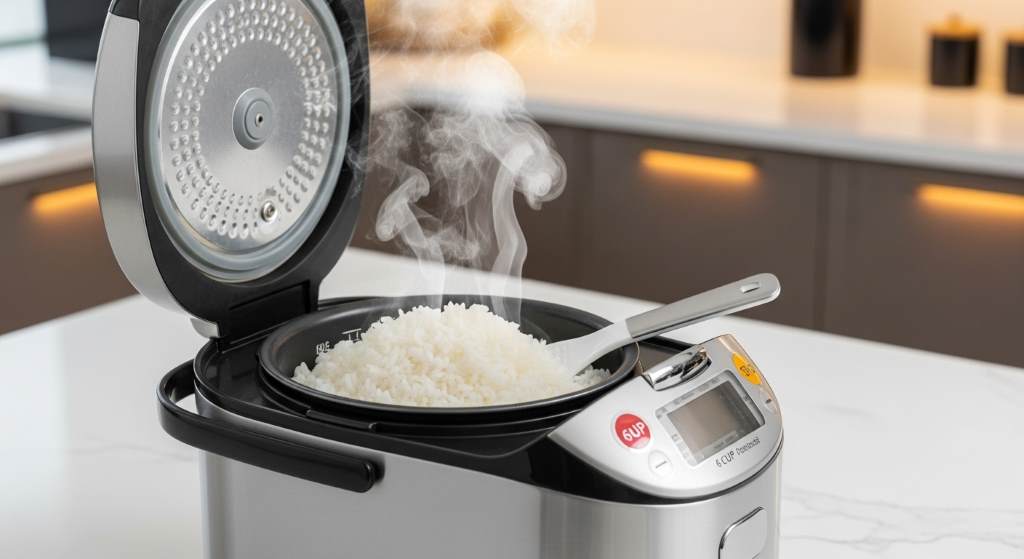
Exploring Larger Rice Cookers: 8-Cup, 10-Cup, and More
Larger rice cookers start at 8 cups uncooked. They climb to 20 or beyond for pros. An 8-cup yields 16 cooked servings. A 10-cup manages 20. These suit four-plus eaters.
Builders add robust features. Fuzzy logic tech adjusts heat. It senses moisture for ideal texture. Induction bases heat the pot directly. This ensures even results.
Furthermore, multi-cookers blend in. They slow-cook stews or make porridge. One family tested a 10-cup for holidays. It fed 12 without fuss. Yet, storage demands space.
Batch cooking thrives here. Prep quinoa salads for the week. Or steam fish atop rice. Versatility expands meals. Still, daily use might feel oversized.
Pros of 6-Cup Rice Cookers
Compact power draws you in. A 6-cup cooker saves counter real estate. It slips beside your toaster. No more cluttered kitchens.
Energy use stays low. Smaller pots cycle quicker. You cut wait times to 20 minutes. Ideal for weeknight rushes.
Portability adds fun. Take it camping. Or share at potlucks. Light weight makes moves easy.
Cleanup simplifies life. Fewer parts mean less scrubbing. Rinse the pot. Wipe the lid. Done in five.
Versatility surprises. Steam broccoli while rice bubbles. Mix in oats for breakfast. One user crafted risotto twists. Creativity flows freely.
Moreover, it encourages fresh cooking. No leftovers pile up. Eat hot, eat now. Health wins without waste.
Cons of 6-Cup Rice Cookers
Capacity limits shine through at parties. Six uncooked cups feed four max. Entertaining? You’ll batch twice. Frustration builds fast.
Scaling recipes proves tricky. Double the rice? It overflows. Stick to singles or adjust down. Trial and error slows you.
Brown rice batches shrink further. It needs more water and time. Your yield drops to eight cooked cups. Disappointing for sides.
Storage for extras lacks. No room for meal prep towers. Plan daily or freeze small portions. Effort multiplies.
Additionally, some models skimp on modes. Basic white rice only? Brown or sushi suffer. Upgrade urges hit soon.
Pros of Larger Rice Cookers
Family feasts thrive. A 10-cup cooker serves eight to ten. Holidays hum smoothly. Guests rave over steaming piles.
Batch efficiency soars. Cook once, eat thrice. Sunday rice powers lunches all week. Time frees for play.
Even cooking impresses. Wide bases distribute heat. No scorched bottoms. Fluff rules every scoop.
Multi-functions expand horizons. Slow-cook chili in the same pot. Steam dumplings above. One appliance rules meals.
Furthermore, it handles grains beyond rice. Barley or farro yield perfectly. A chef friend batches congee for crowds. Versatility pays off big.
Cons of Larger Rice Cookers
Space hogs emerge. These beasts claim cabinet corners. Small apartments groan under bulk. Measure twice, buy once.
Energy pulls more. Bigger loads run hotter longer. Bills tick up slightly. Solo cooks notice the drag.
Overcooking small lots tempts. Half-full pots steam unevenly. Add water tricks or waste space. Annoyance creeps in.
Cleanup scales up. Larger pots demand elbow grease. Scrub edges reach deep. Time sinks post-meal.
Moreover, portability fades. Lugging 10 pounds camping? Forget it. Homebodies win; travelers lose.
Key Features to Compare Across Sizes
Features bridge size gaps. Look beyond cups. Smart tech elevates basics.
Non-stick coatings ease release. Ceramic options dodge scratches. Choose durable for daily grind.
Keep-warm functions hold hours. Rice stays soft, not mushy. Perfect for staggered dinners.
Timers set ahead. Wake to hot grains. Mornings smooth out.
Delay starts shine for shifts. Program evening rice for lunch. Life flows better.
Additionally, accessories count. Measuring cups ensure ratios. Steam trays add sides. Full kits boost value.
Related: What Is The Best Material For Kitchen Sinks
Versatility in Cooking Modes
Modes multiply uses. Basic cookers stick to white. Advanced ones tackle GABA brown.
Sushi settings firm up grains. Porridge softens oats gently. Pick per palate.
Steam functions layer meals. Veggies atop rice cook together. Nutrition stacks high.
One tester steamed salmon fillets. Dinner in one pot. Cleanup halved.
However, match modes to needs. Singles skip extras. Families embrace them.
Build Quality and Durability
Sturdy builds last years. Stainless resists dents. Glass lids show progress.
Handles fold for storage. Lids seal steam tight. No spills mid-carry.
Cord wraps tidy counters. Feet grip slick surfaces. Safety first always.
Users report decade-long runs. One grandpa’s 8-cup fed generations. Stories inspire loyalty.
Real-Life Scenarios: Matching Size to Your Life
Stories bring choices alive. Let’s explore fits.
Singles and couples pick 6-cup. Sarah, a busy graphic designer, loves hers. Quick quinoa bowls fuel her desk. No leftovers taunt the fridge. She adds spinach for greens. Mornings start green and grateful.
Small families lean 6 to 8-cup. The Lopez duo with toddler thrives on 6-cup. Taco nights yield just enough. They steam corn too. Waste vanishes; budgets thank them.
Larger households grab 10-cup plus. The Patel clan of five batches basmati weekly. Curries simmer below. Spice scents the home. Weekends bond over shared pots.
Entertainers upscale to 20-cup. Hostess Mia preps for barbecues. Sides for 15 flow easy. Guests linger; pots refill seamless.
Moreover, dorm dwellers downsize. College kid Jamal’s 3-cup (close to 6) fits shelves. Ramen hacks evolve to fried rice. Independence tastes better.
Office meal preppers scale mid. Remote worker team chooses 8-cup. Potlucks rotate owners. Camaraderie cooks up.
Maintenance and Care Tips for Peak Performance
Care keeps cookers humming. Start with unplugging post-use. Heat fades safely.
Rinse pots immediately. Hot water lifts starch. Avoid soaps at first; they strip coatings.
Wipe exteriors dry. Fingerprints fade fast. Lids disassemble for deep cleans.
Steam vents clear weekly. Buildup blocks flow. Q-tips work wonders.
Furthermore, descale monthly. Vinegar soaks dissolve minerals. Rinse thrice after. Shine returns quick.
Store dry and open. Mold shuns aired pots. Longevity follows routine.
One user skipped cleans; buildup soured batches. Lesson learned: tend daily.
Daily Cleaning Routines
Daily habits build ease. Scoop rice out warm. Scrape gently with wood.
Soak pot 10 minutes. Sponge swirls clean. Rinse under stream.
Lid steams off easy. Wipe condensation beads. Dry with towel soft.
Exterior mists with cloth. Polish streaks away. Ready for tomorrow.
Additionally, check seals. Cracks invite leaks. Replace parts prompt.
Long-Term Upkeep Strategies
Quarterly deep dives refresh. Disassemble full. Brush crevices light.
Run empty steam cycles. Vents purge residue. Freshness revives.
Inspect cords for frays. Safety guards homes.
Users track cycles. Notes log tweaks. Patterns emerge clear.
Moreover, seasonal stores pack smart. Bubble wrap pots. Boxes shield dust.
Conclusion
Rice cookers transform grains to gold. 6-cup models excel in compact power. They suit solos and duos with speed and space savings. Larger ones dominate family tables. They batch boldly and multi-task masterfully. Weigh your crowd size, storage spot, and meal style. Test fits in mind. Your kitchen deserves the match.
Pick yours today. Start with a simple swap. Fluffy rice awaits. What size calls to you? Grab it and stir up joy.
Frequently Asked Questions
What’s the Ideal Rice Cooker Size for a Family of Four?
A 6 to 8-cup cooker works best. It yields 12 to 16 cooked cups. Enough for dinners plus leftovers. Adjust for rice lovers. Steam extras alongside.
Can I Use a Larger Rice Cooker for Small Portions?
Yes, but tweak water ratios. Fill at least one-third full. This avoids uneven steam. Results stay decent, though not perfect. Save for batches instead.
Do 6-Cup Cookers Handle Brown Rice Well?
Most do, with dedicated modes. They extend cook times 10 minutes. Rinse grains first. Fluff post-beep. Texture turns tender.
How Does Capacity Affect Cooking Time?
Smaller pots finish faster, around 20 minutes. Larger ones take 30 to 40. Heat spreads wider. Patience pays in evenness.
Are There Versatile Features in Both Sizes?
Absolutely. Both offer steam and keep-warm. Larger add slow-cook often. Check specs for your must-haves. Simplicity wins for basics.
References
- https://ageconsearch.umn.edu/record/360867/files/75225_95080_105300_AAEA_2025_Poster_Eating_Rice_in_the_United_States-An_Empirical_Re-Examination_Mulimbi_et_al-2025.pdf
- https://www.ers.usda.gov/topics/crops/rice/rice-sector-at-a-glance
- https://www.nytimes.com/wirecutter/reviews/the-best-rice-cooker/
- https://www.seriouseats.com/the-best-rice-cookers
